Oh jesus christ, "green roofs"? "Bee bricks" ?? This is ridiculous turd-polishing. The problem isn't that we haven't made our buildings more freaky, it's that we've destroyed natural ecosystems. So restore the natural ecosystems.
Have less buildings. Leave more undeveloped land. Reintroduce predators. Remove invasive species. Allow nature to take over (it will). And news flash: hedgehogs and bees are only being saved because humans think they're cute. What we actually need more of are creepy crawly insects, weeds, grasslands, bushes, forests, wetlands. You know, that "undeveloped" land that was here before we bulldozed it all and installed strip-malls on top.
Sorry but I have to disagree with the whole tone of this.
I see it this way, the thought hat we have "destroyed a natural ecosystem" is incorrect. Just as incorrect as when a beaver dams a river and creates a flooded meadow. The beaver, and people, are doing what they do, changing the ecosystem to create a habitat in which they can thrive. Those changes, have changed the ecosystem around them.
What Gedge and others in the article are saying, is that it is in human's best interest to support a diversity of habitats that can co-exist with their own. The benefits are three fold, they keep biodiversity higher (balancing other processes in the environment), they can provide benefits for the humans for "free", and they lower the negative impact of humans on the flora that used the space before humans started changing it for their own use.
An example close to home. I live in a typical California 2 story single family home. Because California homes are typically "next" to each other, the walls on the side of my house are blank since there isn't much point of a window that looks at your neighbors wall or worse inside their house at close range. I built a "bat house" which is really just a couple of plywood sheets separated by 1x2s to attach to the eastern wall. Voila, bats come to live at my house. And those same bats are eating pests such as mosquitos which carry West Nile virus in my area. If we could get all the houses on my street to do the same, the city would likely never catch another mosquito on our street.
So what is the "cost" of that? The bat house takes no electricity, its materials are pretty simple. The bats show up for "free" and take care of themselves. There is a guano disposal "problem" but I just dump it into my compost pile and it adds a crap ton of nitrogen to the soil.
So the net of it is that is saves me money on fertilizer, it saves me money on pest control, and it costs nearly zero to maintain.
> Just as incorrect as when a beaver dams a river and creates a flooded meadow. The beaver, and people, are doing what they do, changing the ecosystem to create a habitat in which they can thrive.
I don't think this analogy holds, there is a difference between beaver and people: the beaver has evolved and performs services in an ecosystem, and that system has evolved around the beaver within some suitable geological timeframe. Humans are destroying the environment far faster than anything can evolve to.
If Timothy Morton is correct, humans have already destroyed the earth but we don't know it yet because it is a hyperobject.
> I don't think this analogy holds, there is a difference between beaver and people: the beaver has evolved and performs services in an ecosystem, and that system has evolved around the beaver within some suitable geological timeframe. Humans are destroying the environment far faster than anything can evolve to.
Humans are just a later stage of life's flourishing than beavers:
Eukaryotes have more extropy than prokaryotes; Multicelled organisms have more extropy than single celled ones; Complex mulicelled organisms have more extropy than simple ones; and humans (once they invented farming and writing) have more extropy than complex animals.
The next stage after that -- the stage we're currently in -- is the industrial revolutuon.
The stage after that is the singularity, when AIs will take over.
But it's all life, doing what it does: expanding, controlling resources, reproducing, etc.
Beavers are extremely important parts of their ecosystems. Their dam building behavior is depended upon by many other actors within the ecosystem. They're a keystone species.
Humans clear cutting a forest is not part of any larger, stable system.
Sometimes, it's so difficult to not be full of bitter spite and hatred for humanity when viewpoints like yours exist.
Whales lay dying in fishing nets which trap any and all, their companions watch on, suffocating in our acidic oceans, or choking on a plastic bag, sea birds flying hundreds of miles just to be able to feed on scraps, leaving their nests alone nearly the whole day at the mercy of God, delicate insects burnt to a crisp by gender-reveal forest fires, the very cliched polar bear stands on his tiny piece of ice looking in all four directions for a hint of food, a herd of wild elephants gathers in a circle looking down at their pathetic, poached brethren hunted for a small piece of white sticking out of their heads, turtles being turned into mince meat just to make guitar picks, insects being squished to make colored goo, chickens shitting themselves in fear as they're beheading is up next, all while a know-nothing bloviates self-importantly about AI and Singularity and things he has little understanding of. A shame.
It truly is disheartening to be a part of a species that imbalances the entire world to its favor, in what is likely to be the short term, with technology. And for what purpose? What purpose do we bring to this world?
Look at what we've done to the Southern resident orcas in the Pacific Northwest. Kidnapped, murdered, tortured for pleasure and entertainment, poisoned, starved, deafened, stalked, and then gawked out with loud boats. I can't think of a single thing we've helped them with.
Don't we all already know that the purpose to life is to expand and mutate? Which is also the purpose of the universe in general, come to think of it. So I guess the most purposeful being in the universe is a radioactive Joey Chestnut.
The whales died in agony before, as did the birds, and those delicate insect bodies are crushed, eaten, and dashed as quickly as they're made.
Nature's a beautiful edifice built on the back of hundreds of millions of years of suffering. You could make the argument the most moral thing to do, if you care about the well-being elephants and the turtles and the chickens, is to re-organize it as quickly as is practical and wise.
It’s a win but a small one, because what about every other animal displaced by concrete, light pollution, lack of wild flowers…? Where I live near Paris there where hedgehogs until a few years ago because there were still a few unmaintained and unbuilt land, and finally real estate project after project they are finally completely gone from the city.
I have always felt that the "what humans do is natural too!" argument is a massive cop out and totally understates the massive destruction that humans are a part of.
Your analogy misses the mark by a long shot, and I would say that it's totally irrelevant except that it actually supports the opposite of what I think your point is. Beaver dams, like almost everything we find in nature, sit within a carefully evolved and evolving balance. Beaver damns actually generate and create thriving ecosystems, including benefits for other species, when viewed from a perspective other than a human one. It's only humans that find beavers a nuisance. What humans build does not add to a balance but rather provides an imbalance.
There is no reason to believe, that I know of, that highways and city building, for example, support or diversify or catalyze or <whatever> the ecosystems that they replace and neighbor in any sort of holistic manner. There may be small wins for a very small subset of animal species, but other than that it is destruction and displacement of habitats. Just imagine the next time you're on a highway, even out in the country. Monitor the road kill that you see or the bug splashes on your windshield. They're killed by technology they don't understand while trying to cross a habitat they once crossed freely that is now separated by large swaths of concrete and impassable barriers. Think about all the animals that literally have huge lines drawn in between areas they once roamed. Then notice all the fences, cut grass, buildings, and more that are there and increase in density as you get back closer to the city. All the birds, insects, mammals, and other animals that once inhabited those areas have to go somewhere, or they die off. Now they get condensed and dispersed into areas of tighter competition for resources, all the while still being pushed out by humans in more and more creative ways. There is nothing about this that increases the diversity of ecosystems that once were. It decimates them, literally.
I encourage you to go to a remote place and just notice the area absolutely teeming with varieties of flora and fauna. Then imagine a road there, a house there, etc. and realize what would happen to all that there is there. Then multiply that destruction, degradation, and displacement by the size of human habitats.
Do you know why bat houses are so effective and encouraged by state governments and conversation groups? It's because humans have destroyed and taken over habitat areas for bats, and they struggle to natural find places to call home.
So again, your example supports the opposite of what you think. The fact that bats show up so readily is that they are struggling to find other suitable areas that used to be there.
I would encourage you to think about things from a different perspective when you are out in the "nature" that humans have built. Would you like if another species or even a human bulldozed your house and then built you a little tent to live on a corner of your former plot? Would you call that a "win"? Would you like it if there was, for all intents and purposes, an impenetrable wall or walls built between you and grocery stores and separates you from your family and friends?
What humans have done may be "natural" in a very general sense, but it is almost entirely self-serving. There are clear reasons why extinction rates have gone up and there are countless stories of species struggling more and more in the past 100-200 years.
"I have always felt that the "what humans do is natural too!" argument is a massive cop out and totally understates the massive destruction that humans are a part of."
Fair enough. I agree that if we start from the position that humans are not a part of nature then their impact on their environment is "unnatural." I just find it really hard to support that argument in any meaningful way. I would ask "Are volcanoes part of the natural environment?" When they erupted and created a mass extinction event was that "unnatural"? It is very biblical to put humans "above" nature but that seems to require that the presence of humans on Earth itself is an unnatural state of affairs.
If one subscribes to the theory that Homo Sapiens evolved it feels problematic to me that at one point they were "natural" and at another time they were not. We are quite likely an evolutionary "dead end" if we are successful at pulling off another mass extinction event. But I don't consider us "unnatural", just imperfect.
I would completely agree that our ability to reason has given individuals the capability of choosing how they impact the environment (unlike the beaver that just does what beavers do), but at the same time we are not a 'hive mind' type species where such reasoning was somehow "injected" into every individual.
What the article has advocated are strategies that individuals or small groups of individuals might do to have a different effect on the environment than they currently do. And I think that is an excellent thing.
What I disagree with is that change to an ecosystem is "destruction." It changes what flora and fauna that ecosystem supports, and we may very well change the ecosystem we live in such that it no longer supports human beings. However, if we do that, the world will continue on without us and the ecosystem will continue to change as new flora and fauna evolve to fill the gaps that humans created.
I don't consider it a "cop out" to consider humans to be part of nature, I think of it as a way of looking at human impact in a more dispassionate way. Humans change their ecosystem to support themselves and their offspring. They may do that poorly or in a way that has long term negative effects on their ability to survive, but struggle to define that as unnatural.
Part of my point is that the argument really isn't about what is natural or not. It isn't important, and that's why it's a cop out. Humans are clearly part of nature, evolving via the same processes as everything else.
What is clear is that humans have continually, and at increasing rates, broken out of the precedence set by everything before in terms of fitting into the existing balance and that this reverberates throughout the world in a way that is on the whole not good for nearly any ecosystem. This is what is argued by people bringing attention to these matters. What doesn't matter is whether this is "natural" or not. What matters is that this is bad for basically everything else, and we've already experienced and we're seeing more signs that it's bad for us as well.
Our propensity for violence and technological development has allowed us to flourish and break out of evolutionary development and "cheat" on regarding what resources are available to us. Other animals are usually checked by nature when resource use becomes problematic. Humans are checked but then adapt new ways to consume resources due to technology and our physical adaptability.
I actually didn't make the point that our ability to reason is the key. Other animals potentially match or even exceed (it is unknown) our ability to reason. Such animals are whales, particularly orcas. So I think our reasoning ability is not actually unique. What is unique is our reasoning mixed with physical attributes that make technology development possible and a selfishness and propensity for violence. This leads to technological development that vastly outpaces social and emotional development, which has led to our ad-hoc world and the mess we're in.
> What I disagree with is that change to an ecosystem is "destruction." It changes what flora and fauna that ecosystem supports, and we may very well change the ecosystem we live in such that it no longer supports human beings. However, if we do that, the world will continue on without us and the ecosystem will continue to change as new flora and fauna evolve to fill the gaps that humans created.
When it comes to human induced change, that change is indeed almost always destructive in that existing flora and fauna are reduced in bother numbers and diversity.
I highly, highly doubt humans are ever eradicated save for Earth-level events (asteroid or something like that). I also think "Earth will continue without us" is another cop out. Yes, it would, but not with out destruction and suffering.
Imagine a world without humans. Every day, millions of animals that are able to feel pain die in horrible agony as they're eaten alive; die of hunger or disease; are afflicted by horrific parasitism, or birth defects, or any of a hundred different horrors.
Earth is a giant ball of suffering, and has been since the first animal with a nervous system sufficient to feel pain evolved. It seems pretty hubristic to lay that at the feet of humanity.
Yeah, if we don't coordinate we might wipe out some species, collapse some ecosystems. So? Those ecosystems have beautiful parts in them, but beauty is in the eye of the beholder; and in any case, their beauty is built on the ongoing torture of (presumably) sentient animals. In that case, bring on the mass extinctions, I say; in fact, we should probably speed them up. Shoot or nuke animals instead of letting them starve to death or be eaten alive.
Maybe we can re-introduce animals once we've made them immortal and immune to pain.
(I don't actually want this, I like nature and forests. But I like them because I find them beautiful, and I perceive their value as originating from humans (and to a lesser extent sentient animals) finding them beautiful. I don't care about them for some other metaphysical reason, and nature is beautiful <=> humanity is evil isn't a viewpoint I've ended up with. )
Another cop out: there's already suffering in the world, so why do anything about it?
There are two points. One is that animals and plants suffer in order for others to survive. For the most part, a balance is achieved. Animals and plants take what they need in order to survive, and there's no other way for them to survive. Humans are different. We don't need all the destruction we cause to survive. We simply choose to. The second point is that humans dramatically increase and multiply the amount of suffering in the world. The argument isn't to rid the world of suffering, because how could that even be accomplished? The argument is to reduce humanity's contributions to the suffering.
In your vernacular, this too is a cop out : One is that animals and plants suffer in order for others to survive. For the most part, a balance is achieved. Animals and plants take what they need in order to survive, and there's no other way for them to survive.
It is absolutely true that animals do what they do without regard to the consequences of their actions. The western pine beetle doesn't think twice about killing a pine tree that would have lived another hundred years when it uses it to feed its brood. A beaver doesn't poll the prairie dogs that have lived in the meadow for 5 generations before destroying their habit by flooding it.
If I understand your argument correctly, it is applying morality to the question, not whether or not something is "natural." And that is absolutely a fair way to go about it. One can argue that it is immoral for humans to do the things they do. That is separate from the question of whether or not it is in their nature to do those things.
This statement, "We don't need all the destruction we cause to survive.", is also a problem since if we immediately restored all of the habitat we "destroyed" to convert it to agriculture then there would be a lot of "not surviving" going on.
That we should be good stewards of the planet is something that I think we agree.
My original comment here is that we have to consider human's impact on that planet to be just as 'natural' as the impact of non-human forces on the planet. And it helps in the debate to understand how much of our nature we, as individuals, can influence. Humans are inherently tribal/social animals and as such we are strongly influenced by the "norms" of behavior around us. A really good recent example of this is masking. In an area ambivalent about masking, masking behavior reflects what others are doing. A lot of people wearing masks? More likely to wear a mask. Few masks in sight? People less likely to wear a mask.
Because of this effect, we can (and I think should) influence others to good behavior by exhibiting good behavior. And in the original article this was called out as buildings that increased wildlife diversity over buildings that did not provide habitat. That is both a good and 'moral' thing to do.
To bring the conversation full circle, the original comment to which I responded included this: "Have less buildings. Leave more undeveloped land. Reintroduce predators. Remove invasive species. Allow nature to take over (it will)."
We do that by creating park areas. Not by tearing down existing facilities[1]. The philosophy that we could "fix" things by removing human change is unrealistic given human nature.
[1] Yes we remediate things like mines to revert them back to their state prior to mining but it is rare that a former city will be remediated back to nature. See Detroit as an an example of an opportunity to do so which was not pursued.
>Humans dramatically increase and multiply the amount of suffering in the world
I don't believe that. All the animals that are alive today would die in pain in anyway, no matter what humans do. Every deer that's shot is one not eaten alive by wolves, or starving to death. Does it matter whether a bird drowns in an oil slick or thrashes in the mouth of a crocodile?
Animal life is nasty, brutish, and short.
Even if we killed a large fraction of the animals on the planet in a painful way, that would be a blip in the colossal historical tapestry of pain, and as there'd be fewer animals in the next generation, it would probably be morally neutral from a consequentialist perspective: the overall, average amount of suffering would be constant.
>there's already suffering in the world, so why do anything about it?
No, that's not what I'm saying.
If I care about suffering, I only care slightly (instrumentally) whether it's caused by humans or nature. You seem to care a lot, but I don't. If I 'm going to decide to care about the suffering of animals generally, then that's going to lead me to certain conclusions.
If humans are going to take responsibility for animal suffering, we should take responsibility for all animal suffering, meaning we should reorganize/destroy the ecosphere, replacing it with something more moral. We should also become able to be wise stewards of the new world, of course.
But if I put myself into the mindset of "I care about the suffering of animals", then going from that to "humans should be hippies and let nature be, man" seems pretty evil. If the suffering of animals is bad, then nature is bad and should be stopped.
>For the most part, a balance is achieved. Animals and plants take what they need in order to survive, and there's no other way for them to survive
No, animals and plants take as much as they can get, and most of them don't get enough. The ones that don't get what they need in order to survive die, by starvation or by being got by a predator. The balance here is on a see-saw greased with the blood of living things: if I built a system like that, where little furry animals reproduced until there was no food left and then competed increasingly frantically, with some of them eating the others, and then turned around to you and said "look, they've reached a balance! As many of them die horribly as are pumped out! :)", you'd call me a psycho. You're only excusing it because it's natural.
It's mathematically beautiful, of course!
>The argument isn't to rid the world of suffering, because how could that even be accomplished?
Wipe out the natural world: Evacuate humans and scans/genomes of all the animals we're interested in somewhere else and build a paradise there; then wreck the surface of the earth so that nothing bigger than a bacterium can survive. Maybe we could engineer runaway global warming, to turn earth into something resembling Venus? Deliberately irradiate the whole surface to the point that nothing survives? Build lots of orbital mirrors to increase the solar irradiance and boil the oceans? Grey goo? Dream big!
If this sounds horrible to you, then I guess you have an aesthetic preference for forests. That's fine, but remember that forests and jungles are hell-pits of torture.
I live in a somewhat newly developed area. There really aren't that many bugs around, mostly tiny moths, ants, and the usual cosmopolitan pests like roaches and carpet beetles.
I took a vacation at a 50+ year old home near a river and my goodness, there was just so much LIFE all over. Species of insect I had never seen before, along with land mammals scurrying about. It is absolutely amazing how sterile living in a city / exurb is compared to someplace only mildly affected by human habitation. And it's not like I was living in a concrete jungle either, there are lawns and green spaces but they are just so much more hollow than I ever imagined.
I had the opposite experience, moving into an older neighborhood deep inside the city, but in an area where there hasn't been much construction for the last 50 years. The number of birds, small animals, and bugs are astounding - and this is a relatively densely populated location.
AFAICT there are two main factors:
1. A nearby stream which is part of a protected greenbelt -- never more than 100m wide or so, but miles long.
2. The fact that the area has not been torn up for construction in a generation, so the plants have had time to overgrow everything. I assume the wildlife largely follows the plants.
Of course there aren't any larger animals who need room to roam, because they couldn't survive crossing all the streets. Cars are one of the biggest barriers to wildlife and humans coexisting nicely - or to humans and humans coexisting nicely.
We can go further: the issue is industrial, mechanical, chemical laden agriculture. Agroforestry or simply traditional agriculture with lots of hedges, trees, small plots, etc maintained living ecosystems for millenia in our countryside.
Going to traditional agriculture or agroforestry would involve a lot more people being involved with food production. Not necessarily a bad thing, but that would inherently raise costs (although it may be paid for some by time not money).
Another alternative is to stop subsidizing absurdly inefficient things like factory farming. If someone is selling beef produced by grazing semi-wild land, great! But intesively cultivating land to harvest it to fed it to cows locked in a pen sucks.
It's obviously not simple to redirect some of that to human food (e.g. wheat with low protein is fed to livestock, high protein is used for bread) but still, worth having the conversation.
> Going to traditional agriculture or agroforestry would involve a lot more people being involved with food production. Not necessarily a bad thing, but that would inherently raise costs (although it may be paid for some by time not money)
But it would also reduce unemployment. I know pre-industrial food production was a massive undertaking, but we don't need to go all the way.
How much lower the crop yields are without all this chemistry?
Hunger has mostly left humankind (any famines are first of all political troubles, not lack of food), but this was made possible by improving yields several fold. It's hardly possible without pretty heavy augmentation like fertilizers and pest control.
Hunger has left the developed world, but is still an issue in poor countries. Our society is so incredibly wasteful with food, there are massive amounts of perfectly edible food send to trash every year. This leads me to believe that even with a massive reduction in the use of fertilizers and pest control exactly nothing would change in the developed world in terms of food supply.
However, to enable that we'd probably have to get away from monocultural agriculture which is not only an issue for agriculture, but for instects and other wildlife as well.
True, but I want to caution people. It doesn't seem possible to me that sustainable agriculture of any form can feed the number of humans alive today. Aside from trying to do something about the number of alive humans, the only shot at reducing agriculture's destructive influence is going more technological not less and I for one want to see bespoke space colonies constructed by automated factories on the moon not genocides.
This was originally in reply to a now deleted reply, but it is worth calling out an alternative interpretation, we could move away from meat and make more effective usage of land. I think this is true, but still won't get us all the way.
I think even imagining people were willing to give up meat humans still use way too many raw calories for anything like sustainable organic agriculture to be workable. Maybe it would be interesting to know what percentage of the land dedicated to raising meat is for feed vs grazing. Grazing land is usually more marginal than farmland so while overall good to let it go back to nature it won't replace the sort of biodiversity that turning Kansas back to grasslands would
Also I don't trust it as much, but if it's true that humans right now make up more biomass than all land animals before we exploded it seems difficult to imagine us keeping up without continuing to have huge impacts on the planet, better to keep those impacts dense and controlled than everywhere
https://www.greenpeace.org/static/planet4-international-stat...
There's lots of labor-intensive ways to boost yields without monocultures, fertilizers, and pesticides, right? Planting complementary crops together, planting trap crops at the edges of fields to catch pests, things like that.
How long till robots can do that sort of work? At that point, you can have super-green-bio gardens (fields) worked and pruned 24/7 at the cost-over-time of the robots (and whoever/whatever oversees them, plus manure I guess).
We already have a version of this- called a combine harvester- but the more sophisticated farming tech gets, the more it can reduce reliance on e.g. pesticides without reducing yields.
Hum, that does seem somewhat possible. I guess my counter is just pointing back at the biomass chart. Maybe labor intensive low fertilizer and pesticide farming can work, but we're talking about a majority of land vertebrate mass being either humans or the things we've grown to eat. There isn't a world in which we keep that up and don't massively distort the rest of the natural world. I think we have to accept that and sort of go on from there and decides what sort of distortions we want. Trading mechanization for pesticides seems great, but we'll still need massive amounts of land dedicated to farming and I definitely see it as a more technical not less solution
> edit: or just look at google earth and look at the amount of land used for agriculture
I also encourage those interested in this topic to do this. Exact percentages are interesting, but it is still abstract. Give yourself and hour and just go look for wilderness using google earth. Our stewardship over the planet, if such a thing ever was, has had a sad outcome.
True. We don't need roofs with gardens all the time. But urban planning needs to account for more green space. Of course we need to fix and leave more wild habitat to stay wild, but we also need to create more spaces for the wildlife to roam free. For example my city is packed on one side being the coastline and the other being a massive freeway. We have a lot of green space but not enough places for the wildlife to cross. We need to allow for that. An interconnected "freeway" and "city" system for wildlife made up of ecological reserves and green highways.
Remove the daily generation of inflationary money from the global economy and stop abusing our mother earth with this flawed idea of the forever expanding GDP. Return to moderate living and actually have time to enjoy what nature has to offer without highly industrial vehicles, boats and all kinds of wasteful things which require large industrial complexes and infrastructure. The world needs more wondering and less greed driven market leaders. The profit of a few is destroying the earth and reducing the quality of life - who really wants to slave labor every day without gaining the ability to have long periods just to travel, explore and admire the beautiful landscapes earth has to offer? If we only would reduce and not increase our list of must haves - we might actually start living instead of just existing to pay taxes and pay the ever increasing monthly bills. The rat race to our extinction has to stop. Everywhere where people stop fiddling with nature, recovery starts showing. Stop building dams, stop mega structures, stop generating the need to use industrial scale weekend flights -throwing massive amounts of extra heat in our airspace - for what? To briefly escape the labor intensive life as designed by our rulers. Did you have a choice not to need inflationary money systems? Money which banks -effortlessly- create every night in databases as mere numbers which keep on abusing you and the earth that we are trying to kill as fast as possible?
It's amazing how strong the resistance is to sprawling less. Not to developing less, but just to using more compact forms so that some land can be preserved in its natural state.
City spaces are deserts of concrete, steel, glass and asphalt. With the exceptions of a few parks and gardens within. Why not reintroduce at least parts of the destroyed ecosystems back into these artificial deserts?
If you read the article it tells you that only 1% of the earth's habitable land has human development on it. There's plenty of space for nature to thrive, and it does.
The big problem for me is externalities that affect that untouched world. Industrial and agricultural runoff, different pesticides and things like that.
That's true, but area is not the only important metric. It only takes a thin sliver of highway cutting through a forest to segment an habitat, break migration paths, and strongly affect ecosystems.
The article is mainly about green roofs, but wildlife bridges would perhaps be an even more important example of "building for wildlife".
Driving along the freeways through northern Ontario (400) and northern British Columbia (1 through Banff), I was amazed to see how many wildlife bridges there actually are. The ones in BC are plainly visible because they go over the road, but the ones in Ontario mostly go under the road in the form of large tunnels with fence funnels on either end, and most people would probably never notice them if they weren't paying attention.
I even saw a few under the highway in the prairies in Saskatchewan and Manitoba. I think those were mostly for moving livestock across the highway though.
Animals need corridors to move between populations
Green roofs would improve the temperature of our homes making to spend less in energy. We should build more, just by our own interest. They are nicer to see than just a roof also.
sure, but some of the largest and most important ecosystems which contribute a lot to the overall stability of the earth are being completely obliterated. I remember reading that the Amazon is now a net carbon dioxide producer due to over-utilisation of natural resources. surely that can't be good, right?
I agree with your sentiment but oftentimes small interventions are the only kind possible. And I wouldn't say that something like a pollinator strip is ineffective -- bees and other pollinators are losing habitat, pollinator strips restore them. It may only be one dimension of wildlife but it's a critical one.
I think I agree with you but to play devil's advocate, we're now seeing a huge percentage of jobs around the world could be done at home with minimal upgrades to infrastructure. That in and of itself is evidence that some/more businesses could run virtually. That saves office space that could be returned to nature.
You're perpetuating a dichotomy here, the same dichotomy that produces parasitic industrialization. Humans are a part of nature, and we are fully capable of living in symbiosis with other creatures and ecosystems. Please keep your mind open!
I think you misunderstand the criticism of GMO. They are usually designed to be more resistant to some pretty hardcore pesticides, like RoundUp from Monsanto. That becomes agricultural run-off, and pollutes the nearby ecosystem.
Urban residential areas with houses with few people are the worst imo. They require a huge amount of infrastructure like paved roads. It might be ok to live like that if you have young kids. If you don't, while living like that, you are an environmental burden period. Also, please don't think that driving electric and feeding some birds and eating green etc can redeem living like that
They are huge so even with good isolation they spend too much energy in acclimatization.
That kind of urbanization is made for cars so the streets are empty and you need to travel by car everytime to some mall to buy things.
In terms of land usage, I find it hard to believe that the type of house someone has won't be dominated by the supply chains that feed them and equip them with clothing and tools.
How much do you think a yuppie city-dweller's medium-density apartment and train usage offsets the rest of their consumption?
Why would the supply chains that feed and equip them dominate? Food, clothes, and tools all benefit from high per unit efficiency and this reflects real efficiency in less expensive inputs. Even if you mean the transit the huge barges have very good kg per mile (even if filthy bunker oil is the current norm).
For a simple example of this sort of scale efficiency just take a vat of molten steel for one - a larger vat has more volume with less surface area. For a contrasting illustration of an extreme in the other direction, many thimble sized steel vats would be extremely inefficient as they cool off quicker and either need more of them or give it far more time to cool off.
Housing is linked to transit needs as an inevitable knock on effect. The lack of scale is what makes individual cars less efficient than loaded buses.
I would be perfectly willing to consider hard numbers - there are all sorts of counterintuitive truths.
Farming takes up a lot of land. Even the most land-efficient diets in this analysis [0,1] required 0.3+ acres per person -- a larger land area than most suburban houses sit on, even when including the marginal cost of the extra road they require.
Depending on how you count it, it's definitely within a small constant multiple. A ton of global land goes toward food production. In somewhat more detail:
It's about 27% of the way there (assuming europe == EU). Multiply by 7.8B people and you get 2.1B acres, compared with the 2.3B acres actually used worldwide.
Those numbers might look a little fishy (2.1B should be a hard lower bound, and the upper bounds were >2 acres per person), but the low figure of 2.3B acres in actual use is roughly explained by:
- 9% of the world is malnourished
- Meat and other high-land-use foods make up well under 20% of the global diet (on average more concentrated in wealthier, lower population nations).
- Not all of that meat comes from the land, skewing the exact metrics being used a bit.
I'm sure the 0.3+ acre estimate isn't perfect (back of the envelope calculations suggest soybeans can supply the requisite calories in 0.15 acres, and your other nutrients can be furnished in 0.05 acres), but it definitely appears to be in the right ballpark.
I agree with you but humans are selfish and destructive. It is always down-voted but the only true solution is less humans. Of course, we could change but history has shown we have no desire to do so and worse, are accelerating our greediness. The thing is that the earth has started to change based on our over-consumption. One way or the other, there will be a lot less humans on this planet in some hundreds of years from now.
Have you noticed that the whole purpose of life as a phenomenon is self-sustaining and proliferation?
Forcing lower numbers of humans is not unheard of; usually this is considered cruel. Mass killings aside, take a look at policies enforced by India and China in 1970-80s.
Choosing not to have kids is myopic: if your genes make you more conscious and thus caring about the planet as a whole, removing them from the gene pool lowers the chances that next generations would share these traits of yours.
The best medicine found so far is exactly what the ultra-green do not like: urbanization, education, higher standards of living, minimal numbers of people doing the traditional countryside agriculture. This puts reproduction rates safely below the replacement rate all over the world, no matter what culture and religion.
i would say the purpose of life is only proliferation, it's the environment that provides the negative feed back for "self-sustaining". For example, deer with no predators will proliferate until they starve to death and numbers go down to what can be sustained by their environment. If the environment can't sustain any then the population count goes to 0 to match.
Maybe the ultra-greens are against urbanization and I think there is merit to that. But the other topics don't really fit.
You can put every living human on Sicily and still have space. The problem is that 99% would have died of thirst after a few days.
I think today is earth overshoot day, so we used resources the earth could recoup within a year. That problem isn't solved with everyone moving into cities, it is externalities and our resource consumption. Maybe cities are a few percent more efficient, but it doesn't really matter that much. Cities are also relatively unhealthy in most cases. Living expectation are countered by the proximity of medical professionals perhaps.
I like this idea, but once you build something with some given wildlife in mind... what happens to the rest of the wildlife?
I live in an area where open areas often have a lot of trees. That's great, lots of deer, people like deer ... problem is the deer have no predators. The deer don't have to move around and love to eat certain tree saplings in particular. Result? The forested areas simply don't have those trees or bushes that the deer like to eat anymore. Forested areas that would have thick underbrush are absolutely clear cut (as far as underbrush goes) by the deer. It's so complete you'd think humans went through and clear cut the brush, but it's the deer.
Worse, that impacts other animals who rely on those trees and bushes.
I feel like there's WAY more balance to be considered here and second order effects we don't understand.
We like to help animals we like to see / are easy to help (there are some rabbits outside my window now, I like them) but helping them might not be the best choice.
The concept of "building for wildlife" doesn't mean picking and choosing the cutest animals - it means trying to understand that balance and maintain it. The people who study ecosystems understand a lot of these second order effects well, and we're always learning more. The concept here is to start listening to those people.
i live in an area with lots of deer.
They don't shoot the cougars that come into town, they tranq them and relocate them. So there are no predators for the deer. What's the answer?
The cougars don't just eat the deer, they also change the behavior of the deer (as one would if they were constantly worried about killers hiding in the bushes). The only way to restore balance is to bring back the keystone species.
The only thing needed? People shouldn't interfere with nature so much. Let it all balance naturally and optimality by doing: nothing. No research needed, no plans, no guidance, just let the earth do it's thing and Paradise returns quickly.
That's a lot of Lyme disease, deer in your windshield and 10ft tall garden fencing whilst waiting for evolution to turn bobcats into deer eaters. I prefer to turn back the clock and just restore what was removed.
I know. I used to be able to walk right up to the deer when I moved here.
I've chased them off the property enough times though now that as soon as they hear the front door, they run, and they actually go quicker through the yard then they used to.
I live in one of these areas (Texas). Wolves were taken out by 1970. I do wish we would introduce them, but I'm not certain that my neighbors would be so happy about it.
In my area, we have city deer. These are deer that live in the green belts and navigate through the city. I wonder what would happen if wolves were reintroduced. Wolves normally keep to the outskirts of human civilization, but would they drive more deer into the city. Or would smart wolves head to the city for the easy pickings.
This really seems to be a problem of suburbanization (which also drives of natural predators). If cities had strong urban growth boundaries we could avoid a lot of this sort of human/animal conflict.
This is a weird idea I’ve had but… would it be possible to e.g. breed domestic dogs who will eat the deer but won’t be aggressive to humans? I have a pitbull who is really nice to people, other dogs and even cats but absolutely goes crazy when it sees one of these city rats coming out of a bush. I raised her obviously she wasn’t a wild animal.
The animals that traditionally hunt the deer aren't aggressive to humans. It's trying to solve a problem that doesn't exist.
Most apex predators are hunted out of existence to protect the marginal amounts of cattle they kill. See the great wolf slaughter happening in Montana currently. After they kill off all the wolves, the negative externalities of that action will become apparent, yet again, and the federal government will spend millions rehabbing the wolf populations until some populist conservative decides to decimate the population again. Rinse, repeat.
I have often wondered if it wouldn't be cheaper for the government to pay for the occasional lost cattle instead of costly rehabilitation. Of course there would need to be safeguards in place to prevent abuse of the mechanism, and to prevent predators from getting used to easy preys.
Me too. Compared to all the other subsidies agriculture receives worldwide this would probably be pretty small.
One problem with cattle is that they are being held in one place, can’t escape which makes them easy and reliable prey . So once a predator has figured that out they will come back more often. I have read about people having good success with dogs that are trained to confront predators like mountain lions and bears so they won’t come back.
Or, and this is just a personal opinion, but the world could stand to lose some meat production. We could give them a stipend for moving away from ranching to protein production through plants or other goods. I know this is controversial, but meat does require orders of magnitude more water and resources and doesn’t seem reflective in the revenue realized.
Edit-but definitely start by paying them for whatever wolves eat.
The wide ranging public pasture ranchers aren't where the biggest ethical problems are in meat production, and wolves aren't generally an issue with factory farming.
Let's pump the brakes on torture box meat before we start trying to solve something many people don't even consider a problem (I believe ranching and free range meat are an almost unmitigated good. )
I've proposed this many times, but the idea gets no traction. I don't really know why. I bet paying for a cow now and then would be even cheaper than paying government hunters to use helicopters, etc., to hunt the wolves.
Sounds like my hounds. One of our dogs has an arrangement with a deer who got hit by a car a couple years ago, she and her fawns can hang out under the dog's favorite oak tree, but any other deer gets chased off with much noise.
However, I can't say we've noticed any reduction in the deer fecundity here because they get chased around. They simply learned to tolerate the occasional chase as a cost of living in our valley, which is evidently not too burdensome on them.
Lol, you don't really need to selectively breed dogs to chase animals. All dogs have what's called a "prey drive," to an extent, which is essentially their inborn desire to hunt other animals. It's left over from when they were wolves. Different breeds have higher or lower prey drives, so it's not at all uniform from breed to breed or dog to dog.
Valid point. Although I'll be picky and say that breeding plays into that .... but admit I don't want to bread a whole new dog for this imaginary and possibly unproductive job ;)
Breeding is a factor with pretty much anything when it comes to dogs. Hypothetically, you'd want a dog fast enough to at least sort of keep up with the deer, sturdy enough that Bambi isn't going to beat him up too badly if he gets too close, and smart enough to know that Bambi can be pretty mean if he has to be. This, of course, is on top of having enough of a prey drive to actually want to chase after Bambi, and trainable enough to learn how to do it so Bambi doesn't kick the crap out of him.
Putting all that into the Dog-O-Matic(TM) Computer....
... WORKING...
... beep boop Beep beep ker-chunk boop boop
... DING!
THE MOST SUITABLE DOG FOR YOUR REQUIREMENTS IS: the Scottish Deerhound[0].
====================
Of course, there are other dogs that would do just as well, like the Norwegian Elkhound[1], the Karelian Bear Dog[2,3],
the Bluetick Coonhound[4, 5], or, even that well-known gentle giant, the Great Dane [6]. Believe it or not, Great Danes can run really, really fast. Their top speed is somewhere in the neighborhood of 30 mph[7]! Even Bambi might not be able to outrun that.
Whichever breed you choose, get your dog from a reputable breeder of working line dogs. Working dogs, show dogs, and pet dogs all tend to have different temperaments, and you'll have an easier time if you pick a dog from a line that's suited to his role. Frequently, the different lines will even have different physical characteristics[8, 9].
Not only that, but you'll want to make sure you pick a good breeder, and choose the dogs that will be most likely able to succeed at running down Bambi. For hunting dog breeds, at minimum, this means the dog's parents should have passed breed standard hunting trials, or the equivalent. The ultimate would be a pup whose parents are both field champions, or champions in some other doggie sport[11]. You want a star canine athlete, not a bench warmer.
Anyway...
TL;DR: Yes, breeding matters. No, you wouldn't have to create an entirely new dog breed to chase Bambi around. Pick a good breeder. Choose a dog based on his parents. You're looking for an athlete, not a pet.
[4]: Watch out when talking about your Coonhound in polite company. These dogs live to chase and corner raccoons ("coons") up in trees, barking at them from the base of the tree while the hunter shoots at them.
Why be careful? Unfortunately, "coon" is an extremely offensive racial slur against Black people in the US. You really want to avoid that type of association with dogs, Black people, and trees, if you know what I mean.
Generally speaking, ecosystems should be managed for ‘focal’ species, those with the largest requirements and pivotal role. In this case, deers natural predators. a re-introduction or deer culling may be paired with this approach.
I'm not sure what you are saying. You plant a wide range of pollinator and native trees designed to offer roosting and nesting space for birds, bats and insects. etc. Wy jump straight to wolves?
I just want to chip in to confirm that with only minor actions and pretty much no sacrifice on your end, you really can help A LOT of small wildlife. Not only do you help it, it quite simply makes your environment nicer too.
Should you have a garden, even if small, don't go for exotic plants, select local ones. You can easily optimize the ones attractive to bees and butterflies. Combine with one of those insect hotels (be sure to get a deep one) and presto...you just created a brand new ecosystem that is fun to watch.
Minimize lawn surface to what has actual real utility, use the rest for plants, bushes, trees, a simple pond. You're going to be amazed at all the stuff that appears the next season.
Have some tall bushes with dense foliage and the first bird nest will soon appear.
Clean dead leafs from your path for your safety, but nowhere else. Its nutrition for a very complex and rich ecosystem of soil animals.
Don't kill everything that moves with pesticides, only take care of plague insects forming a real and direct threat.
A bat box is the cheapest thing, and your reward is sustaining these stunning animals, as they clear out excess mosquitos. Their appearance can be timed nearly to the minute every single day, just before sunset.
Shut down needless lights, allow nocturnal wildlife to do their thing and stop confusing moths.
The above costs near-zero effort at near-zero cost. The effect is that you're sustaining a complex web of life, from mesofauna to larger insects, snails, amphibians, flowers, birds, bats.
Just casually observing all this buzz from the garden chair is wonderful. Quite a lot better than the sterile "tiles and lawn". Even better is to get a macro lens and capture it all, you'll be set for life with an amazing hobby.
Do it. Give wildlife a little room, and give it a chance. It will blow your mind how it will thrive.
If still not convinced, might I add that the above is 100% compatible with the lazy. Once it's in place, it's pretty much inaction from there.
I'm not convinced an insect hotel does anything useful. Ours and any others I've seen get taken over by spiders and webs just about instantly. And the spiders here already have enough places to live!
This just shows you still have the wrong mindset in wanting to manage outcomes.
The goal of an insect hotel is not to maximize insects you like to see or think are pretty.
The goal is to create a habitat normally found in nature itself. A place to nest or even overwinter. Because our concrete jungle has few of such places.
After creating the place, you let it play out.
In your case, spiders seem to dominate it. So what? Spiders are a valuable part of the ecosystem. If they become too numerous, birds will thin the herd as will parasitic wasps.
In my garden, I do get a fair amount of various bee species in the hotel. 80% of them won't have a successful life cycle due to other predatory insects.
Not only is that normal, it's supposed to happen. Insects have a ridiculously numerous offspring.
I also see the opposite happening. Thin-waisted predatory wasps hunting baby spiders, stuffing them in their hotel room for their larvae.
Anyway, if you still believe the spiders are out of control in your place, it means your garden has too few songbirds. In an urban environment, highly common songbirds and spider wasps are the top predators of spiders.
Not sure where you live but I'm in Australia. In Europe or North America, I hear virtually no birds. In Australia and including in my suburban backyard, there are loads of birds - songbirds, parrots/lorikeets/cockatoos, magpies. I have an acacia (with parasitic growths that birds visit for berries) and loads of fruit trees among other things that attract birds. We have no shortage of birds.
But this is Australia and there are many spiders - trees, ground, adapted to the urban environment, etc. Huntsmen, red backs, black house spiders, white-tailed, orb weavers, wolf spiders, mouse spiders, etc. Every alcove or cavity or pipe has a spider. Go out with a headlamp at night, and the eyes of wolf spiders reflect back at you from everywhere. Spiders live in all the rear-view mirrors of my cars, and under the rear wiper blades. Multiple spiders live in the frame of each window and sliding door, at all times. From my travels, I'm convinced we have a far more noticeable urban spider population than say Europe or the US.
The urban environment here is flooded with spiders. Corrugated iron is perfect for them, creating a cavity every inch or two the length of a building. Multiple spiders live on every chair of my outdoor setting. Not much of the back verandah does not have continually refreshed spider detritus hanging underneath eaves. If I turn a spadeful in the garden when it's dry, multiple wolf spiders emerge and try to resettle.
Admittedly our gifted spider hotel is small (size of a box of cereal), but it only takes one spider to crawl a scrappy web across it, and it's not going to be of much use to insects.
In my 40+ years, I've found one wasp nest with entombed spiders (mostly large orb weavers). But you can't move around here without encountering a spider. Maybe an insect hotel stands a better chance elsewhere in the world, but here it is trivial for every cavity to be controlled even by one spider, and I'm pretty confident spiders are not in desperate need of more housing opportunities.
Hah, I admit that's a radically different situation. Aussie wildlife is a world on its own. I'm honestly not sure what it would require in your place to stimulate insect diversity, probably best to use local expertise, or accept that it's you being a guest in a spider world.
We have loads of bugs. I just think the insect hotels are a gimmick here. If it wasn't a spider in there, it would be an earwig, and they're already everywhere. Bees and heat are probably my issues in the garden - lack of pollinators and dried stamen. Some vegetables have gone from trivial to grow, to can't fruit properly at all, in the space of 2-3 years.
I filmed the other month in a garden that was absolutely flooded with bees. I'm working on copying some of the flowering plants they had. Saw a blue-banded bee there for the first time in my life: https://bit.ly/3i7kgiy
This is all well and good in the UK. Bee bricks and bat boxes are great. But the largest predators in the UK are badgers. The real difficulty is how one accommodates bear and cougars. Even large deer can be a problem. Up to 200 Americans are killed by road accidents involving deer every year. Do we continue to close schools and break out the dart guns every time someone sees a bear in a tree? Or do we develop neighborhoods with pathways through which the even non-cuddly animals can pass without conflict. That costs far more than the occasional bee brick.
there's simply no way to build cities in a way that accomodates bears or cougars, because they need a territory far larger than the area we could possibly provide in a city.
building for cougars or bears means building dense cities that perserve as much wild space outside the city as possible for animal habitats.
i like the idea of adapting buildings to be less hostile to animals that find themselves in the city, but anything that increases sprawl is the worst thing you could possibly do for wildlife.
I think it is starting to be one of those things that most people on this site have come around to realizing. I'm eager to see whether it permeates the rest of society and what actions we start taking in that direction.
I lived in a neighborhood (Vancouver) where bears were regular back yard visitors. Cougars were around but rarely seen. Many California suburbs seem to get alone with local predator populations. I think the key is not to fence things off in a manner than gives them no easy escape route when confronted.
The big issue with California and predators is in what they end up eating in the suburbs: trash and poisoned rats. A lot of businesses in CA have a box in the back full of rat poison. The rat eats that then walks off and dies someplace, the coyote/couger/bear/owl/hawk/vulture finds the carcass, eats the poison, and also dies. There aren't many sources of high quality food in CA suburbs for predators. You don't get large populations of deer, like in suburbs out east that were clearcut from forest, since suburbs in CA are developed out of farmland or pasture or oil fields generally and there isn't much habitat surrounding most of these developments that support larger game populations like out east (compare satellite imagery of Sacramento to Cleveland and see how stark the differences in forest cover are in CA vs a typical eastern city.
Adelaide is an interesting case study. There is a river and nature reserve that stretches from the hills to the coast that cuts right through the city. They do incur on the edges of it in a few locations but for the most part it's got native vegetation for the full length of it. It's one of the many nature corridors there, and the network of nature corridors continues to expand throughout suburbia. They also have a ring of parklands around the CBD all of which have native vegetation in at least some areas if not quite the whole area.
They're not unique in having a river cutting through the city, but they were lucky to have the foresight of a city planner who felt there was some value in keeping the native vegetation all the way back at the city's inception.
There is beautiful and diverse birdlife throughout the city and that's in no small part due to the amount of native vegetation kept around throughout the city and suburbia. From the surrounding hills, the suburbs just look like a regular forest with some buildings poking out here and there, it's incredibly green. There is about as much parklands as there is real estate in the CBD itself.
Surprisingly, London has a huge amount of parkland and multiple rivers - you only have to fly over it to see it all (or live there to experience it). And lots of varied creatures living there.
We have our concrete jungle like most places, but the parklands surrounding the city are great (though parts resist activation) and older/richer areas are typically very green with street trees and creek systems running through suburbs. It's a great place to live (third most liveable, supposedly) but the downside is you're a long flight from most of the rest of the world.
In fairness, I got the feeling that the author of the article was writing in the context of western Europe. While Western Europeans have a hard time understanding the large and dangerous wildlife populations that exist in North America, it's hardly surprising since they don't live there. The author's prescriptions sound like nice and (relatively) easy things people in the UK can do to make life a bit richer there. It's doubtful he'd suggest pathways for bears through American or Canadian suburbs :-).
There's a lot you can do in terms of building for biodiversity that will benefit 10s of thousands of species before you have ti to worry about the handful of apex preditors that harm humans.
> The real difficulty is how one accommodates bear and cougars.
One doesn't. Bears were exterminated in Britain 1500 years ago. And cougars were never native here.
> But the largest predators in the UK are badgers.
Fine by me, badgers aren't a threat to humans.
> Do we continue to close schools and break out the dart guns every time someone sees a bear in a tree?
No, we exterminate them like my ancestors did 1500 years ago, because they were sensible (my ancestors, not the bears). Maybe put some in a wildlife park or zoo.
This happens a lot in the Midwest also. Deer are really dangerous because they walk across roads in the night and they freeze up when they see a bright light.
Yes, my initial reaction as well -- we don't really build for people in the US, we build for cars. If we truly built for people, we wouldn't have sprawl and ridiculous vehicle infrastructure that affects wildlife so much.
My 2 cents: If your home has a garden, consider planting some *thorny* bushes. People love fertile and friendly varieties with high yields. To you, thorns might seem like an unnecessary annoyance, but plenty of birds and small animals like to build nests there. Little birds are often ambushed by bigger ones, like magpies or jays. A nesting box can be taken over by a woodpecker, who is very happy to widen the entrance. But both of them will stay away from a wicked mass of thorns. Birds nesting there won't be the same species as in a nesting box, but filling much the same role in the ecosystem (for example lesser whitethroat).
> These visions of wildlife atop city buildings aren't just picturesque, they're often hailed as one solution to the world's rapid loss of nature.
Livestock takes up about 40% of the habitable land on earth (80% of all agriculture land) to supply only 20% of global calories (https://ourworldindata.org/land-use). The world is producing 3 times more meat than it was 50 years ago so we're eating much more than we used to as well (https://ourworldindata.org/meat-production).
Animal products clearly aren't substantial, are destroying ecosystems, and taking up a crazy amount of land that could be rewilded.
People generally don't want to hear about this and would rather discuss things like "wildlife atop city buildings", non-industry farmed animals (which take up even more land) and technological solutions (which we don't have time to wait for) instead.
Sounds like a great idea. One of the many factors increasing tick populations in Canada are roads. They subdivide forested areas and migration paths for deer which are the primary hosts for deer ticks. Which means deer stay closer together and so do the ticks. Along with the warmer climate it's turning into an epidemic.
It may not be perfect but starting to build affordances for wildlife seems like a fantastic idea for our health and theirs.
If we can build an overpass over a freeway for some teensy town of 400 people, it should be no issue at all to construct a handful of overpasses for wildlife. Imo the issue with these proposals is that these wildlife bridges are almost always dramatically overbuilt and overlandscaped to look natural for humans, and cost hundreds of millions of dollars, when just a simple bridge and a fence funneling wildlife to the bridge would do. A deer doesn't need the bridge to look like a perfect natural feature. They walk along roads as it is just fine if that's where they are heading. We just assume they want some natural looking thing but I don't think there is data suggesting that these sorts of wildlife overpasses are more effective than a simple cheap ugly one.
The problem I see is that wildlife don't pay property tax.
It seems more and more trees are being torn down in my city to make way for new buildings—houses, stores, etc. And I thought about why it might be happening and I stumbled on the idea that buildings increase property value, property value increases property tax, cities (in the US) often run on property tax.
Perhaps some wildlife areas can have economic value, such as tourism, but I struggle to see how leaving certain places wild and untouched fits with the incentive of property tax.
I agree it has those benefits and if I imagine those would create a higher quality of life, then each property that does have homes or businesses could be worth more. So city revenue could go up because 1) each parcel is higher in value or 2) the city could even charge more premium property tax rates to be in such a high quality city.
In other words, the city maintains itself more as a luxury good than a commodity.
Natural areas can increase property values. Look at the property values of the houses abbuting griffith park or anywhere along the san gabriel mountains vs those in south central LA. The difference in price for an otherwise identical 3br home might be $1.5mm between areas with easy access to nature and those without. I'm sure this is true in just about any city, where neighborhoods near parkland are generally more valuable than areas far from parkland surrounded by development.
Recognize the monetary value of the civic services they provide! Raccoons should be paid at least half as much as a human "sanitation engineer", right?
Specifically for roofs, I'm curious how much more expensive and lasting a nature-roof is. For example, take a residential house. The roof needs to be able to sustain the weight of the soil and collected water. Roofs are typically built with slopes so that the water doesn't collect. Now you have to design the structure to support that. Drainage is an interesting problem too. How do you drain the water without losing your soil and soil nutrients?
I think a solar roof is a better use of the roof, if installed properly.
This is going to come across as a nitpick on the title, the idea is taken farther in the article and I think it's an important distinction.
No, we should not build for wildlife. We should only build for people and what is good for people's lives. The only question then is, "what is good for people?". If not harming the biodiversity in a region and having more green spaces are good for people (which they likely are), then we should do it, but it is not the case that, as the article says, "whenever we build something...it's our responsibility to accommodate wildlife that would be displaced otherwise". Our only responsibility is to our own lives and the rights of others, animals do not have rights and cannot even conceive of them. If people want to help animals because it makes them happy, that's great, but we don't owe any moral responsibility to them.
This is called anthropocentrism. When you consider the amount of biodiversity loss and other land-use changes that've happened over the past 100 years, along with the civilizational collapses that've happened in prior history with that view, perhaps you'll change your mind.
Yes, but if biodiversity loss and changes in the land caused by some action we've taken leads to civilizational collapse, then obviously that's not good for our lives and we should stop doing it. If biodiversity has effects that are good for us, then we should build things with that in mind (I only say "if" here because I have not read much in depth on the effects of lessening biodiversity, although it's pretty obvious how it could be destructive). I support infrastructure that promotes biodiversity, but disagree that we should do it for the animals, we should do it for us.
The good news is that what is good for humans is to maintain biodiversity and what's good for biodiversity is good for animals. We are currently deficient in this area, so even if the world was full of big_curses we would still need to make some progress in protecting wildlife, if even for our own selfish reasons.
But you are wrong that animals don't have, or cannot conceive of, having rights and that we don't "owe" them anything. The truth is that we owe all living things the right to exist in the same way your rights are granted by the constitution. It may be a tough to shake off a barbaric mindset like the one expressed above, but if you don't want society to leave you behind, I suggest you try.
> The good news is that what is good for humans is to maintain biodiversity and what's good for biodiversity is good for animals.
Exactly, which is why I'm generally in support of building things in a way that maintains biodiversity. But we should be doing it for us as the principle driving this action, even if the outcome seems the same.
> But you are wrong that animals don't have, or cannot conceive of, having rights and that we don't "owe" them anything. The truth is that we owe all living things the right to exist in the same way your rights are granted by the constitution.
Which animal can grasp a philosophically grounded conception of rights? If they can't do that, they do not know of rights. Certain species of primates may react to what they perceive as fair and unfair, but this is founded in emotion and social habits, not reason, which is required for a conception of rights. You will never see an animal respecting your rights, they simply happen to act in a way that doesn't directly infringe on them, but only sometimes. Also, I should clarify, just because animals don't have rights doesn't mean it is good for us, as individuals, to do anything we want to them at any time. Unnecessary cruelty is not good for an individual psychologically, in addition to the fact that it does not add to your life in any way.
> Some of that floor area will go into multi-storey buildings but some will be provided by ever-expanding urban sprawl, which will leave even less space for wildlife.
I don't think we're ever going to erase this. We keep saying, time to tackle urban sprawl. I don't think we have the ability. I think the urban sprawl IS the reaction to density. It happens again and again. For every human that likes living in a city there's another one that hates living in a city.
This is a lot harder than people anticipate. While we can "patch up" gaps in supporting wildlife with things like highway crossings (example: https://apnews.com/article/north-america-mountains-us-news-w...) we have bigger ecological problems that are harder to fight. For example, invasive species of plants and animals are very hard to manage and require concerted efforts to establish native species while removing non-native species. Whether Asian carp or Scotch Broom or whatever, the widespread footprint of invasive species has distorted our ecology so much that minor accommodations from how we build may amount to a blip on the radar. My point is not to say this isn't worth talking about, but to draw attention to a larger need for something like an "environment corps", funded to just put in the hard labor required to address these other widespread issues affecting health of wildlife and our environment.
I remember reading an article about the effect of highways creating a virtual perimeter that the genetic diversity of the wildlife within it degraded to such a low variation over generations and as a result those animals were exhibiting negative defects.
It's not just buildings. Almost everything is framed this way. "Not harmful to humans" has been common for as long as I've been alive. Food, water, air, radiation/light or sound. It's like if something is not known to be harmful to humans, then we are not supposed to worry our pretty heads with it.
Well, I do care about all sorts of things that I can eas6 ignore/shield myself from but are harmful to others, including other living beings.
There's really interesting research on integrating native ecology into the human environment. Douglas Tallamy's recent book on native-plant ecosystems [1] stands out.
I would love to see more hybrid building in areas which can support them natively, which is the key (native species) - but I also would love to see combinations of aquaponics and LEED engineering coming together with new biomaterials to build more forest like ecosystems inside of our cities
That's a good idea but first we should fix ourselves. Daily we produce so much toxins that ultimately harm the animals, so if we want to fix anything we should fix ourselves.
I've been researching how to make my yard more insect friendly, and a couple themes have crept up:
1. Don't mow your lawn, or mow less of it less frequently. Bugs need tall grasses, and tall grasses hold moisture, attract other bugs (ie prey). They flower and help pollinators. Mowed lawns are like a desert for them.
2. Change outdoor lights to be motion activated, instead of always on. Light pollution interferes with all kinds of bugs, given their attraction, and some bugs like fireflies use light for their own purposes
3. Don't spray insecticides or treat your lawn
4. Turn over part of your garden to wildflowers and native plants, let it get a little overgrown in that boundary. Even a few square meters can make a difference
5. Try to learn to tolerate / love insects more. They're closest thing we have to aliens to interact with! There's of course exceptions (ticks, mosquitos...), but so many of them are beneficial.
And I wish we had vaccines for malaria, lyme, etc so we had to stress about insect caused maladies :(
Although it's restricted by HOA in many areas, one alternative is also to not have a lawn. Grow native species, food, anything that homogeneous non-native grass.
Bear in mind, in many suburban neighborhoods, you will get fined for not mowing your lawn, and then the city will mow your lawn, and charge you for doing it.
Great points. FYI, at least in NorCal, native plants are typically much hardier than regular grass and other plants used for landscaping. In other words, they're well adapted to periodic drought conditions, so, you probably won't have to water them at all.
The title does a very effective job of conflating the goal of benefit for humans with the goal of benefit for "wildlife." Probably intentional, possibly with good intentions, but definitely a bonanza for the green roof industry trade association whose message is uncritically trumpeted in the first three paragraphs.
Yep, it's a fluff piece, probably planted by that industry group. However, it's a fluff piece about some potentially really cool stuff, so I think it's important to separate what the piece works so hard to conflate: benefit to humans, versus benefit to "wildlife." Biophilic design is about improving human well-being by incorporating natural elements that provide physical or psychological benefit to nearby human beings. There's an inevitable self-centered tendency, when people see and enjoy "nature" in the built environment around them, to assume that the benefit goes both ways, and the article encourages readers to believe that these two concerns dovetail conveniently:
> By making our buildings just a little more accommodating to this complexity, we could reap ecological rewards as well as personal ones. It will take more than carpeting roofs and walls with plants to stop the biodiversity crisis – but it could be a stimulating start.
However, providing local, immediate benefits to human beings by accommodating "natural" elements in the built environment is a fundamentally different aim from providing global, long-term benefit to human beings through healthy ecosystems. The latter concern is dominated by global warming and will be for a century. Biophilic design will have a modest impact on global warming, if any. Biodiversity and habitat loss are also concerns, and biophilic design will only benefit the narrow category of species that can survive alongside us in cities.
The argument for combining the two concerns is basically that it's easy. Biophilia is an easy sell because it's about human benefit, and if we can leverage that for ecological benefit, it should be a win/win.
However, I think catering to biophilia is a double-edged sword. People can very easily be fooled by the sight of a few bees and butterflies outside their window into thinking that they are living in harmony with nature, and nature is thriving. It's a cliché for people in rural places to laugh at environmentalists in cities, believing that 1) city-dwelling eggheads don't understand how big and wild nature is, while rural folks who are "closer to nature" can look outside and see that nature is doing fine, and 2) if anything is harming nature, it must be those dirty industrial cities, not agriculture and rural land use. City-dwelling people are equally vulnerable to the illusion that seeing a few isolated wild plants and animals means seeing healthy intact ecosystems, as illustrated by the architect quoted in the article as saying, "You realise how much complexity there is in nature" (when you're looking at birds in your garden in the middle of London.)
Biophilic thinking complicates people's thinking about environmentalism in a direction that undermines our focus on global warming. We have got to the point where I think most people understand how a person living in a metal high-rise surrounded by concrete and getting to work through a mechanized tube can be living more "in harmony with nature" than someone living in a bucolic setting at the end of a long driveway miles outside the city. Even people who hate this idea and would dispute it understand the logic behind it. We have spent decades getting people to think in terms of carbon footprints and direct and indirect energy use, and the conflation of biophilia with environmentalism takes people back to the concrete, simplistic idea that you can judge the environmental impact of a lifestyle by how "natural" its aesthetic is.
So, while biophilic design is a positive thing locally, we shouldn't promote illusions about its environmental impact. We shouldn't mistake investment in biophilic design for investment in global environmental outcomes. And we should be extremely skeptical of an article about green roofs that serves as an uncritical platform for an industry association that makes money from building them.
(I still think green roofs are great, by the way.)
Need a green corridor across the continent, instead of border wall. Border river with crocodiles. That way we can be environmentally friendly with the migrants escaping climate change down south


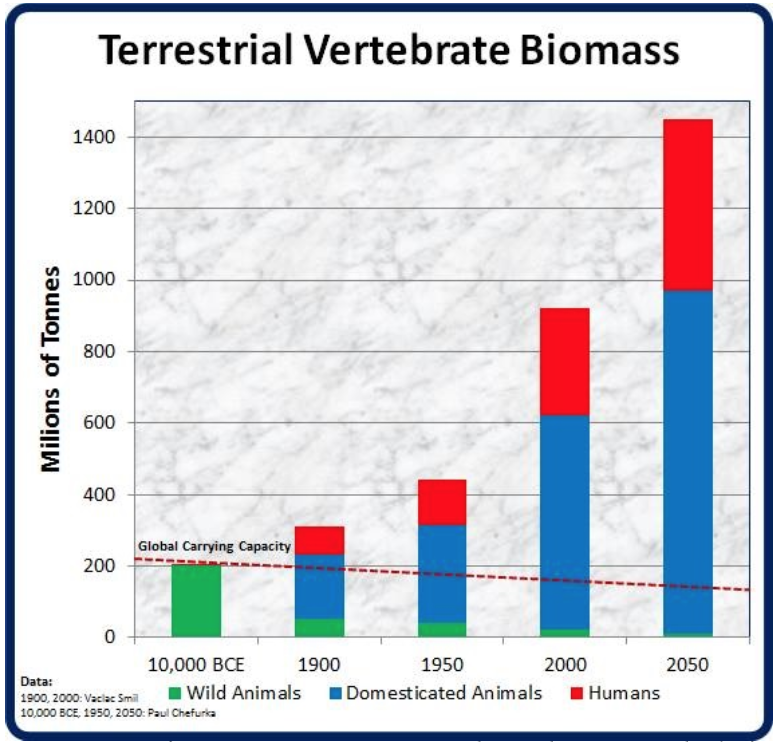
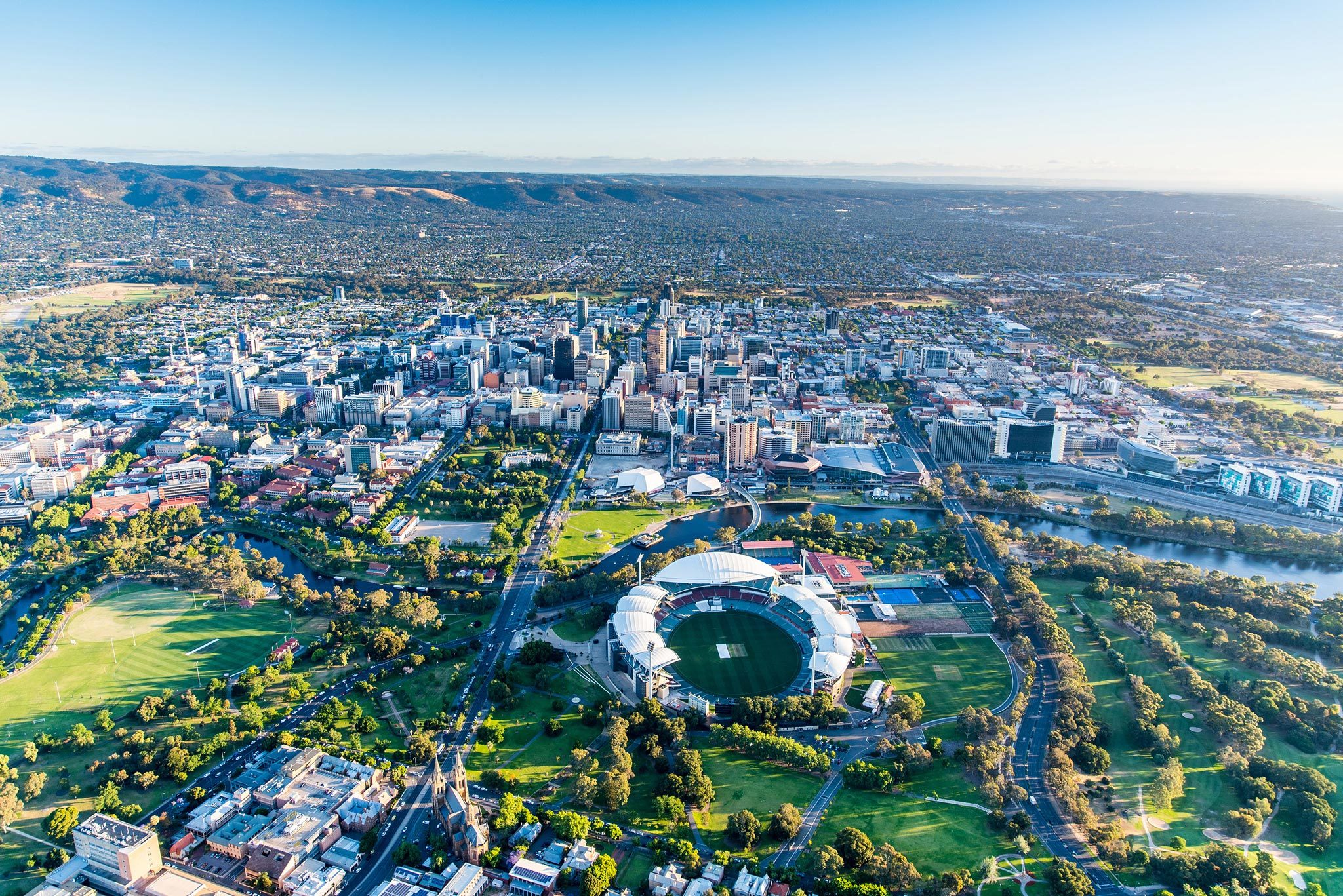
Have less buildings. Leave more undeveloped land. Reintroduce predators. Remove invasive species. Allow nature to take over (it will). And news flash: hedgehogs and bees are only being saved because humans think they're cute. What we actually need more of are creepy crawly insects, weeds, grasslands, bushes, forests, wetlands. You know, that "undeveloped" land that was here before we bulldozed it all and installed strip-malls on top.