>Only around 8% of Swedes live in households spending more than 40% of disposable income on housing, compared to 15% in the UK and almost 40% in Greece, according Eurostat data.
I wonder what metric they use for "not working".
It's not like a lack of rent control is creating vast new supplies of housing here in London and as far as Im aware the fastest period of homebuilding in NYC was in the 50-60s when rent control was at its strictest (https://cbcny.org/sites/default/files/media/image-caption/Ho... ).
Rent control actually works great for the limited number of people who can get into rent-controlled housing. They love it! Unless you want to move to a different apartment, or have your friends move near you, or have any pressure on your landlord to improve the property, or…
It’s everyone else who suffers the most. Usually they have no choice but to move somewhere else or stay at home with parents, so you can’t get an accurate picture by looking at aggregate household statistics. Unless you’re deliberately trying to ignore everyone excluded by these policies.
Rent control is one of those policies that sounds great as long as you ignore second-order effects and pretend the population and economy never change. In practice it just creates a different system of haves and have-nots while removing any chance for the market to compensate.
>It’s everyone else who suffers. Usually they have no choice but to move somewhere else or stay at home with parents
A lot like London without rent control then, but if rent control were implemented it would be the primary culprit for what's happening anyway?
Color me skeptical.
Seems to me it's the landlords that really "suffer". E.g. the SF landlords that paid a tenant hundreds of thousands to get them out ( https://apnews.com/article/lifestyle-business-san-francisco-... ). Rent control just decides whether the "spoils" of restricted supply go to landlords with the most capital or the renters who lived in the city the longest.
Hacker news cries bitterly about nimbyism (especially in SF) that restricts development to keep up property values and rents. Whom do they think is most incentivized to do that? Redirect those spoils to leveraged landlords and find out.
> A lot like London without rent control then, but if rent control were implemented it would be the primary culprit for what's happening anyway?
I’m not sure what you’re trying to suggest about hypothetical rent control in London, but it should be clear that London was geographically exhausted long ago and they’ve been debating architectural preservation and building height control ever since.
You can’t simply buy a property in London, knock it down, and build a 50-story skyscraper. Using it for your case study on rent control doesn’t make any sense.
> Seems to me it's the landlords that really "suffer".
This is the fantasy: Stick it to those evil developers and landlords, amirite?
The fallacy is assuming that you get the exact same apartment under rent control, but cheaper. You don’t.
The truth is that being a
rent-controlled landlord is easy mode. You have very little competition, by law, and the waiting list to get into your apartment can be years or decades long. As a result, you don’t have to compete on anything. Who’s going to turn your apartment down when it’s their only shot at housing and no one’s building new construction to compete at artificially depressed prices?
Now you don’t have to worry about installing good appliances or even nice carpet. The air condition doesn’t work well? Too bad, as long as it meets regulations (if any) then that’s good enough. Why would you if your tenants aren’t choosing based on competition? The tenants suffer, too.
And you’re still ignoring all of the people locked out of the system by the ensuing decade-long wait lines, as is the case in this article.
>I’m not sure what you’re trying to suggest about hypothetical rent control in London
I'm stating that the extreme lack of supply ascribed to rent control also exists in similar cities without rent control.
So maybe rent control's effect on supply is vastly overblown as you can see by looking at the large amount of house-building in NYC before 1974 in the graph above, which is when rent control laws started getting really watered down.
>It should be clear that London was geographically exhausted long ago
Thats kind of absurd. It only recently caught up to prewar population levels. Property prices skyrocketed way before that.
>The truth is that being a rent-controlled landlord is easy mode.
If they like it so much why do they try to trick/bully tenants into leaving or offer large sums of money to tenants to leave if that fails?
>And you’re still ignoring all of the people locked out of the system by the ensuing decade-long wait
Give leveraged landlords market rent in restricted supply environments like SF and the FIRST thing they will try to do is to inhibit further development with NIMBYism that might bring down their rents and damage their investment.
Detractors of rent control tend to feign support for new residents but theyre perfectly happy for them to be priced out alongside the long term residents of the city.
More social housing fixes the underlying supply issue. Higher property taxes fixes the underlying supply issue. Wanting to kill rent control before or instead of fixing these things means being concerned with profit, not people.
Rent control is a band aid while that happens to keep long term (especially elderly/vulnerable) renters housed.
> So maybe rent control's effect on supply is vastly overblown.
Just because rent control negatively affects supply doesn't mean bad supply is only caused by rent control.
I live in London too and I'm baffled by the lack of tall buildings in pretty central parts of the city. The real solution is more supply.
> Rent control is a band aid while that happens to keep long term (especially elderly/vulnerable) renters housed.
At the expense of people who don't currently live in London but could, such as immigrants or people from poorer parts of the country finding a good paying job here.
>At the expense of people who don't currently live in London but could, such as immigrants or people from poorer parts of the country finding a good paying job here.
Kicking grandma out of her rented apartment and on to the street isn't going to suddenly mean that Romanian cleaners won't be living 7 to a house in zone 5.
This housing crisis was deliberately engineered in London as a result of the 1980s war between Thatcher and local government. Council housing was privatized as a result (& some of those gains were capitalized by existing residents through right-to-buy).
Councils were starved of tax funding through the UK's comically low council tax rates. This meant that not only was owning property a much better deal but also that councils lacked the funds to increase the supply of housing. Hence prices taking off like a rocket.
There's your supply issue. Rent control would be a drop in the bucket compared to that.
Not london, but i moved away from cambridge in the 2000s to switzerland of all places, which i thought was hugely expensive.
Well, in cambridge, i got kicked out of 2 flats in6 years because they wanted to raise rents, each time, i had to move further out, get a smaller place and still had to pay more money each time, i wasn’t getting pay rise in line with this and i think that’s still the reality across much of the uk, house prices and rents are rising higher than wages.
I also noted across this time that younger people apparently like staying in more and the selfish gits are spending less money on other things and somehow that’s their failing.
I didn’t have my rent raised in ten years here, in fact, as interest rates went down, i would have been well within my rights to demand a decrease. Also, bars, restaurant and clubs seem much more vibrant here than when i was in the uk, as if younger people had a bit more disposable income that flows in the local economy
I had the fun idea to tie minimum wage to real estate in the area. Take the national average rent for an apartment for a family of x people. If the regional average rent is 10% lower the minimum wage can be 10% lowered as well. If the average rent is 100% higher the minimum wage can be cranked up by 100%.
It would create problems for poor companies that will have to make room for more effective entrepreneurs. At the same time it would create new opportunities in areas normally not considered.
Are you advocating for an end to all property rights or full housing nationalization or something? Do you advocate for 100% capital gains taxes, including on housing? I don't understand why you target rent control as the only thing that rewards the people who already have things.
I don't support policies that actively entrench the status quo. I'm for taxation that's as high as possible without causing too much negative impact on investments. We're having a conversation about rent control here though, that's why I only talk about rent control, in a conversation about taxation, I'll talk about taxation.
two ways of looking at things.
on the one hand, there's the view that society exists to take care of people, including letting grandma stay in her appartment if she wants to. on the other hand is the view that society is a competiton, grandchild against grandparent, and so on. one of these views is insanity.
So should grandma occupy a five bedroom house by herself a 15 min walk from the city for twenty years while her children wait until their mid thirties for a deposit on a studio?
but what of you can only afford it because of rent control? isn't that the actual discussion at hand, elderly people staying where they've lived forever because they can afford to due to rent control?
There's a limited supply of housing in those high demand locations, not everyone who wants to live in London can live in London because there just isn't enough units, with that limited supply, housing should go to the people who need it the most, like the people who have jobs in those locations.
Then rent control will allow the _most_ people who have the _shittier jobs_ to live closer to work. I don't think there is a real care here about anything other than "I want the power to do what I want", which translates pretty closely to "mah freedoms".
Absolutely not, they protect current renters, not people with the lowest wages, people with the shittiest jobs have been priced out already. Rent control protects the millionaires renting in Mayfair as well.
> If she's retired, she can move somewhere cheaper so someone who actually needs to live there for their job can move in.
OTOH that is extremely cruel. Older people, assuming they have lived there most of their life, are the hardest hit by having to change. All their lifelong friends are near, their trusted doctors are nearby, it's all they know.
> I live in London too and I'm baffled by the lack of tall buildings in pretty central parts of the city. The real solution is more supply.
I just spent 5 days in London and was shocked at how many tall buildings there were that weren't there 20 years ago, and indeed how many are being constructed - not just in the centre and docklands, but in battersea and vauxhall too
Indeed, and vacancy numbers are to be expected. Go to any source for rental investments and you'll typically see vacancy rate assumptions of 4% to 8%, because tenants leave and placing a new tenant can take some time. If you plot that on a city home to 10 million people, it's entirely natural to find that a few hundred thousand homes are vacant at any point in time, typically only a few weeks or months. The 'long-term vacant' problem is relatively minor by comparison, and while that must certainly be addressed, it's not at all going to change the order of magnitude of the current housing issue.
> More social housing fixes the underlying supply issue.
How could social housing fix the issue? The underlying issue is too many obstructions to building new houses, which restrict supply. If commercially motivated developers cannot build enough houses due to bureaucracy and obstructions by NIMBY groups, then municipality would likely fail too.
My house was build some 30 years ago by students who paid for their education. They added a new badge of construction workers every year (and the oldest badge got their diploma). I have no idea what happened with the concept. They are now back to [the usual] building things next to and inside the school then demolishing it.
I imagine the collective mind could greatly benefit if everyone had to spend a few (education focused) months in construction (and/or say farming etc) Its not boring if its just a short period. In construction you can learn the basics of a discipline (and make yourself useful) in just a few days.
But I agree it is the obstruction that prevents cheap housing. Its probably intentional (to some extend) simply to drive up prices.
> Now you don’t have to worry about installing good appliances or even nice carpet. The air condition doesn’t work well? Too bad, as long as it meets regulations (if any) then that’s good enough. Why would you if your tenants aren’t choosing based on competition? The tenants suffer, too.
I'm totally against rent control, but London's rogue landlords and its very low quality housing are world famous and people coming from all over the world spend the first 6 month adapting to crazy stuff like carpet, old carpet, 10 year old carpet, fucking carpet, windowless toilets, wooden walls, decaying electrical systems, holes in the walls, carpet (I can't get my head around the idea of having carpet in a flat), etc... and carpet (unless they are in the top 5% of the income distribution and can afford to pay 2-3K£ per month in rent). Air conditioning and half-decent insulation are for the top 1%.
Said that, I don't think London's problem is lack of rent control, but rather it is lack of development of the rest of the country and the government artificially inflating the housing market.
> it should be clear that London was geographically exhausted long ago
It's clear that there are over 30,000 empty homes in London, while most flats built are way out of the range of ordinary families.
Many people are locked out of the system now, we have "affordable housing" that you need to earning about £80k to buy, the current system is utterly failing.
>It's clear that there are over 30,000 empty homes in London
So? According to wikipedia london has anywhere between 10.0 million and 14.3 million people (depending on whether you're counting "urban" or "metro"). 30,000 empty homes translates to 80k people[1]. As egregious as that might sound, is a drop in the bucket relative to the overall population. The 30k number also fails to differentiate between long term emptiness (eg. billionaires hoarding houses) and short term emptiness (eg. units undergoing renovation, units looking for a new tenant). The latter is necessary for a functioning rental market, otherwise it's impossible for people to move into/around the city because all the housing units are locked up.
> Stick it to those evil developers and landlords, amirite?
Seattle so far has not imposed rent control, but they've done everything else they can to create benefits for renters at the expense of landlords.
And so the smaller landlords exit the business, and the larger ones raise rent to cover these new "free" goodies.
One of the freebies is the city will provide a free lawyer to any tenant with a dispute with the landlord, but the landlord gets to pay for his own lawyer.
Yes, but by reducing the lawyer cost for the tenant to $0, the tenant is far more likely to initiate legal action, even for frivolous cases. The tenant can regularly use that as a threat.
I would think that the blame for rising rents in Seattle might be more realistic to put on 600,000 people, many of them earning hundreds of thousands of dollars moving into the metro area over the past decade.
With a firehose of money sloshing around, of course rents are going to rise. You can be damn sure that I'm going to outbid any of the locals for my apartment. Rent is barely a blip on my budget.
I've read in the letters section of the Seattle Times many, many letters from landlords who are exiting the business in Seattle due to the extra uncompensated costs heaped on them by the city.
When a landlord 'exits the business', do they also load the apartment they are letting into a helicopter, and take it out of the city?
The housing inventory doesn't change, regardless of whether landlords are 'exiting'. Like any conscious class, they are just complaining because they, like the rest of us, want more money.
Many own the home, they can sell it to anyone, including people who want to own it as a residence. Underperforming buildings also get razed by developers.
> Many own the home, they can sell it to anyone, including people who want to own it as a residence.
Which, in terms of the rental market, is the exact same thing as that person long-term renting the unit.
> Underperforming buildings also get razed by developers.
... And in this town, when that happens, they get replaced by buildings containing more units. You may have seen a few cranes here and there on the city skyline.
There are few mechanisms through which rent control can hurt.
Rent control discourages building more units. The more you can make from rental, the more companies will invest in new construction projects.
Rent control can decrease efficiency of living situations. You can imagine an old woman living alone in a 3 bedroom unit with rent control because it would be more expensive for her to move to a smaller unit. Or someone who gets a new job far from their current rent-controlled apartment but won't move out because the rent is so much cheaper.
Yet the strictest rent controls went hand in hand with the fastest homebuilding spree in 1950s NYC.
It clearly didnt discourage that much. Maybe it didnt discourage it at all?
Or maybe it does a bit but is eclipsed by the effect of, say, NIMBY landlords inhibiting development, hellbent on staying above water on their eyewatering SF mortgage.
>Rent control can decrease efficiency of living situations. You can imagine an old woman living alone in a 3 bedroom unit with rent control because it would be more expensive for her to move to a smaller unit.
I can imagine. She could get priced out of the city entirely I suppose.
It seems to me that if the market rate is intent on 10x'ing her rent maybe it's the market that should be forced to adjust first, not her.
More home building. Higher property taxes. Rent control while the effects kick in.
Seattle (which is for forbidden by the state from implementing rent control) added 2-3x the housing units as San Francisco from 2010-2020 despite similar population growth in both cities. The impact of price controls on supply is a well studied phenomenon. Lower price for something -> less incentive to produce it.
If you look at the data above it shows home building peaking in the early 1960s in NYC. Rent control laws were strong until the 1970s. That's the point when homebuilding plunged and didn't perk up for decades.
Weakening them in 1974 if anything seemed to restrict supply.
SF has comically low density housing that is driven by homeowners lobbying to restrict development.
The difference between SF and Seattle is probably property taxes (higher in Seattle). It discourages land from being hoarded and used unproductively.
Because of the laws around new buildings, rent control advocates have an incentive to prevent old buildings from being redeveloped: if they are redeveloped then there will be fewer rent controlled units! This does regularly play out in the politics of development in the area[0].
Then when rent controlled unit can be redeveloped, there's a desire to allocate various percentages to different income levels. This means that some units have less income for the same cost so it's hard to balance meaning fewer projects get off the ground.
Now there's even further issues about development as a right vs requiring a use permit...
So, there's a lot of contributors, but the political impact of the politics of rent control is significant.
70% of housing units in SF are still rent controlled. The negative influence of price controls are still felt. Not to mention, repeated attempts to repeal Costa-Hawkins means the threat of rent control is still hanging over developers heads.
Units built after 1980 in SF units aren't subject to rent control. On a purely econ 101 level "old units are unprofitable/new units are profitable" should spur more new construction to minimize the effects of old units on your portfolio.
I agree with this, but the misunderstanding because no one is explicitly talking about how there is a desire to preserve rent controlled units. This means it's very hard for the econ 101 to play out.
> Seattle (which is for forbidden by the state from implementing rent control) added 2-3x the housing units as San Francisco from 2010-2020
and yet to keep up with demand we would've needed to more than 3x what we did, though from what I understand, the infrastructure to build more high density housing even faster just doesn't exist. Seattle was literally building housing as fast as it is possible for a US city to build housing.
If true that, in my opinion, points to a more significant problem in America.
> It seems to me that if the market rate is intent on 10x'ing her rent maybe it's the market that should be forced to adjust first, not her.
Assuming a family of 4 would live there instead, she's effectively removing 3 people from the city. That can force other old women to move out of nearby homes that aren't rent controlled (since prices become higher than they'd be if more people could fit in existing housing), or it could prevent people from moving in. But either way, less people can live there. The policy isn't without harm.
> I can imagine. She could get priced out of the city entirely I suppose.
kind of an unlikely worst case. There's a gradient of prices as you move further from the city center, and this particular hypothetical woman is moving to a much smaller unit. I haven't heard of a city where the average market price unit was 10x the rent controlled price. It's probably 2x-3x at worst for an equivalent unit.
> Assuming a family of 4 would live there instead, she's effectively removing 3 people from the city.
I think is overrated concern in general. Most popular cities aren't underdeveloped. Rather the problem is concentration of resource. Having less optimized areas are actually a good things as that means more areas are equivalent. Which is really what supply is in housing markets. It's when every one too young, old or poor have to move you get problems because now all the attractive things are in the same area. Which means the demand will be very high.
Also this is happening in the housing market in general but apparently it isn't a problem when it's wealthy people retiring in their forties because of the housing market itself.
> There's a gradient of prices as you move further from the city center, and this particular hypothetical woman is moving to a much smaller unit.
That is mostly true if you are moving voluntarily. Because if you couldn't find something beneficial you wouldn't move in the first place. It isn't as true when you are being forced to move. Often it isn't even about what you are moving to but what you are moving from. Once you can't live close to your family, acquaintances or familiar establishment it doesn't matter as much.
It's sort of curious how so many seem to agree that we are "losing our values" in society (or whatever) but then base everything on assets. If we want people to be able to live close to their grandchildren, know their friends from growing up, involve themselves in organization or otherwise make social connections it isn't going to be free.
> More bread baking. Higher bread taxes. Limit bread prices while the effects of all these magical new baking companies flocking to lower prices and higher taxes kick in.
Also, some will get cheap subsidised bread allotments, others won't get anything. And if you get an allotment of bread to feed 3 people but it's only you, there's no mechanism that redistributes the excess to those who need it most, despite massive scarcity.
And if you get a certain type of bread you like at a certain age, but your preferences change and it becomes bland, there's no mechanism for others who love your type of bread, to be incentivised to exchange your types.
e.g. my dad, who is in a rent-controlled apartment with 3 bedrooms in the capital city and has no mechanism or incentive to move out, despite not using the space, not wanting the space, and not wanting to live in such an in-demand area necessarily. Oh wait, I meant bread.
Rent control has 2nd order effects that can do a lot of harm. If rent-control was mixed with market based incentives and a limited time to the right to an apartment, it wouldn't be as bad. I'm not against rent-control per se, but as with all things, it must be balanced. Just adding more of it isn't a solution. And balancing existing rent-control rules with reasonable additional (market) incentives, would help.
For example, if cities allow an individual to live in a rent-controlled unit for 8 years, after which they must leave, that's better. The unit can then go to someone else, also rent-controlled. Instead, some people get a lifetime right, and others a lifetime waiting list. That's a fundamentally unfair use of public funds. It's not perfect (leaving a home has a chance of making it harder to stay connected to a local labour/social circle), but two people having each 8 years is clearly preferable to one having 16 and the other nothing.
Another example is if (such as in Germany I believe, if anyone can link an English source that'd be great) you have a system where your rent is controlled based on usage. e.g. suppose market rent is 1500 for a 3 bedroom, rent controlled it's 750 for a family of 3. The moment you live there alone it's no longer 750, but instead say 1000. That creates natural incentives to only renting a place that is necessary to fit your lifestyle. My dad for example would exchange his place with someone who lives with a family of 3 in a 1 or 2 bedroom home, because of this.
How exactly do higher property taxes encourage more homes being built?
Edit: I guess you mean taxes on land, not the houses. But even then, would this not encourage to build high-yield luxury condos instead of high-density cheap space?
> Rent control discourages building more units. The more you can make from rental, the more companies will invest in new construction projects.
Actually, I would think the opposite. If capital-laden landlords aren't getting increased returns from their existing holdings, they would be incentivized to create more supply by funding new developments.
Rent control doesn't typically restrict the prices they can set on new housing, only on existing units. Therefore the ROI is there to be had, just not in forcing people out of their homes.
Actually nimby zoning is more so what prevents this in Seattle. Without such small groups of home owners could potentially drastically increase their profit on their homes by selling together to a developer building an apartment building.
Rent control can mean many different things. Different rent control schemes are implemented in different cities. But generally, any rent control scheme that reduces rental prices across the board is going to reduce new construction. I think this is pretty uncontroversial among economists.
I think your logic is flawed here.
1. There's no reason why making landlords earn less money would make them want to invest in real estate more. If you have $1 million to invest, you'll try to choose the best investment available to you. It doesn't make a difference if your current property is doing well or badly.
2. If landlords make less money, they should have less capital.
3. Even assuming your premise was correct and landlords who make more money from their property want to invest in new properties less, it wouldn't matter. As long as building new units is a good investment, someone else would do it.
And it's next to impossible to move to the rent controlled side of Berlin. The reality of rent control is it's a handout for the people who already live there at the expense of those that wish to move there.
I don't see how that is particularly legitimate argument against rent control as that is how the housing market works in general. The difference is that if you buy an apartment you also get appreciation.
New development is occurring in Berlin because the rent control does not apply to new units and it's on purpose. (Although didn't the rent control policy get voided by some court?).
As I understand it, and I'm not sure I do, the "you can't increase rent by that much" law got knocked down, and the govt response was to buy a bunch of properties and offer them for rent at rent-controlled prices.
Interesting times. It'll be fascinating to see this play out. Like a social experiment on rent control.
There is lots of research on this. Here's one heavily cited paper that finds what the previous poster was suggesting. Fine to disagree, but it would be nice to see some counter evidence.
In terms of London, there is also the problem of building restrictions. I don't think we're going to see tall residential towers popping up in say, Mayfair, anytime soon. I understand that this kind of change would completely transform the character of London. But the price of not wanting change is sky high rents.
I'm generally favorable to rent control (it's a socio-political tradeoff, like all public policies), but rent control on single-family homes or single units (as with renting an in-law), which is what that paper examines, is a horrible policy. The consequences for landlords are far more extreme than rent control on large, multi-unit buildings. This makes it's difficult to infer similar supply effects between rent control on single-family homes and on multi-unit buildings.
Turnover in SF is actually quite robust. The vast majority of tenants don't stay in the same apartment for decades. This is especially true during boom periods. IOW, ebbs & flows in turnover actually tend to benefit landlords. But a small number do. The average turnover rate is ~20%, which means the average occupancy is ~5 years. For large buildings what matters is the average. The fewer the number of units (either in a building, or in your portfolio), the riskier things become.
The riskiest of all is a single-family home, whether you rent out an in-law or the whole house. In the face of rent control you're not only risking being stuck with the same person indefinitely, paying an increasingly below market rent, but you're locking up for an indefinite period what is probably your largest and most important asset. It's a potential financial nightmare, and one with realistic odds (e.g. maybe 1 in 10 instead 1 in 10000) of befalling you.
As the building grows larger, the more the risk is spread and you can rely on the average occupancy term. Moreover, the larger the building, the less likely one would want to tear it down to build something larger. IOW, the larger the building, the more closely your expected future investment returns approach non-rent control levels.
Rent control policies should be accompanied by policies that promote densification. All forms of rent control will tend to reduce supply to some extent (at least, that should be the a priori expectation), but rent control also provides important social benefits. IMO, those lines cross, but I would never expect the benefits to be greater than the costs in the context of single-family homes.
You're right. I was confused. It doesn't cover the main residence of single-family homes. But AFAIU the 1994 rent control extension did encompass pre-1980 in-laws in single-family homes, which are quite common in the vast areas of San Francisco containing single-family homes. (Most homes built after 1930 put the primary living space on the 2nd floor. The first floor was a garage, and it was extremely common to build an in-law at the back of the garage.) They would be more common but for the fear people have renting them out.
The 1994 law encompassed multi-unit buildings of 4 or less, which were previously excluded from rent control. An elderly neighbor of mine owns a classic 1960s-era 3-story, 2-unit apartment building. He lives in one unit and keeps the other vacant so that his children won't have any trouble refurbishing or selling the asset when he dies. This is a nearly identical scenario to someone living in a single-family home with an ADU. There are several such homes on my block, though I don't know the owners so don't know how many are kept unnecessarily vacant.
There is lots of research going the other way too. https://www.sciencedirect.com/science/article/abs/pii/S02642... Forty years of rent control: Reexamining New Jersey’s moderate local policies after the great recession. The short of it is moderate rent control doesn't positively or negatively impact aggregate prices, but it prevents displacement in the short term.
Not in Mayfair, but all around the fringes of the city they are.
If you want a £500,000 studio flat 30 minutes away from central london by tube there is a massive amount of supply. If however, you can afford said property, you probably dont want to jam your wife and 2 kids into it.
And with high speed trains on the west coast mainline you can get a 5 bed detached with garden for around that - with Euston reachable in 45-50 minutes in places like Rugby.
Interesting way of looking at it, but if you want to make a positive impact for the most people then supplying more housing would make a lot more sense than messing with prices.
So the difference between with and without rent control is just a matter of who gets excluded?
With rent control, basically those who were there first get the housing, those who come later are out of luck.
Without rent control, those who are more wealthy can afford the housing, those who are poorer are out of luck.
If that was the only oversimplified way to see the effects of rent control, I'm sincerely not sure of what would sound better (or less worse) to me. I like when a city keeps its soul and doesn't slowly become a theme park for rich people (which is what I see in mine over the decades).
> With rent control, basically those who were there first get the housing, those who come later are out of luck.
And then they vote against any new construction "to keep the neighborhood's character intact" (remember in the 50's when certain groups of undesirables were excluded from certain neighborhoods?)
> Without rent control, those who are more wealthy can afford the housing, those who are poorer are out of luck.
> Without rent control, those who are more wealthy can afford the housing, those who are poorer are out of luck.
I prefer that. It's not just about wealth, but also about how much you want to live there. I know people who earn about as much as me and spend > 30% of their net income on rent because they want to live in a trendy area. I don't need to live there, so I was able to choose differently and pay ~12% of my net income.
Also: with wealth, there's at least some correlation with merit. With a lottery, there's none.
I feel a bit confused about what you mean with that it is not about wealth. If two people wants to live in a place as much and they both are ready to give 30% of their net income, the richer one would get the apartment in a system with no rent control, right? Your point only makes sense if everyone had the same net income.
Secondly, why is the merit of high income more valuable than waiting in the line for longest time? None of them is a lottery in my opinion.
>Secondly, why is the merit of high income more valuable than waiting in the line for longest time? None of them is a lottery in my opinion.
People invest internationally. This gives a strong bias for money to chase large metropolis because of agglomeration effects. So now "everyone" has to move to the city to work for the investor money. There are people who just want to get their fair share of the money. If you let someone live there that can't find a job that gets him investor money then he basically displaced a productive worker bee and made the entire economy worse off. Social mobility takes a massive hit as a result.
That worker bee could have earned enough to live in a newly constructed apartment. If he actually managed to get a rent controlled apartment then congratulation, you just subsidized one of the richer individuals.
Think about it this way, you want vulnerable people to afford their apartments. Why are you subsidizing every single apartment instead of subsidizing people in need? In fact, the subsidy is greater the more expensive the apartment is. You're subsidizing the rich.
I said it's not just about wealth. Yes, if both a millionaire and an average salaried employee spend 30% of their income, the millionaire will always get the house. But they don't compete for the same real estate. Instead, the average person competes with others grouped around the average, and 30% vs 15% of income is a significant difference. If you really, really want to live in the prime location, you can, you just have to spend more.
> Secondly, why is the merit of high income more valuable than waiting in the line for longest time?
Because it correlates with useful stuff being done for society. Not perfectly, of course, but somewhat. Waiting doesn't at all. And it's usually not about "waiting", it's often about being part of some group, having the luck of the draw, knowing someone in the office that assigns priorities, or "inheriting" the right to live in some (publicly owned) flat from your parents.
What happens then? Person A lives in a very desirable place, person B does not, and person B has to subsidize A's flat.
All of these places suffering from severe housing shortages have some government policy which can clearly be linked to it. Sweden has rent control, London has a labyrinth of building restrictions based on historical preservation among other things, etc.
There's an obvious solution here, it's just not one most people living in these areas wants to hear.
Sweden had a functioning rent control system for many decades until relatively recent changes. Please feel free to elaborate how you can clearly link the current situation to rent control and not those changes.
Land value taxation and reduction of regulations which artificially limit supply are the obvious solutions.
Taxing improvements to land makes it less likely that people will build or renovate, so all such taxes should be removed. Taxing land, however, disincentivizes landlords from holding land idle.
Regulations are also important.
If there is a mandatory minimum amount of parking that must be provided, then it becomes that much harder to build more units, even if you are near transit and most of your tenants don't need cars.
If there are height restrictions, restrictions on mixed-use development, restrictions on the number of units allowed, and so on then these will likewise cap the amount of supply.
The problem is that the people who like rent control also dislike land value taxes. Land value taxes mean that if your neighborhood gets a successful shopping mall then the land value goes up and some people are priced out of the area.
The reason people support things like rent control is "I've lived here my whole life but I can't afford rent anymore because it keeps going up."
The half-assed solution is progressive taxation. Your first plot will be taxed very little. Every plot after that more and more.
It's not perfect because it is basically a subsidy to owner occupants so it won't help suburbs become denser. However, it disconnects the impact of taxation on home owners and commercial developers/investors which means home owners will be more willing to tax developers. The one benefit is that large scale development will naturally consider denser housing because they want to optimize their tax burden.
I agree. Rent control vests certain residents who for whatever reason have chosen to remain tenants in the same place for a long time, at the expense of newcomers and overall economic productivity. But for people who hate change, it works as intended. Makes it hard for new people to move in, and makes building new things an unattractive proposition.
However, with respect to affordability, a key complaint across the board, LVT does indeed help by reducing the amount of speculative holding and removing tax penalties for improvements. Under LVT residents will be able to afford better accommodations for less money. Particularly if other onerous policies are removed such as rent control, building restrictions, parking mandates, taxes on demolition, and the like.
A media that is very "concerned" with housing shortages where rent control is concerned suddenly loses its concern and gets overly concerned with crime, delinquency, public debt, etc. when a solution that brings down property values is mooted.
Raising property taxes will also help as it will act as a disincentive to use land unproductively or as a store of value.
Social housing (or other approaches to subsidized housing) are a necessary piece of the puzzle. However, they are also extremely expensive: around my area the commonly cited number is $500,000/unit. It would take a very major political shift to finance enough housing to even cover the 1-2 million people/year US population growth rate (~$750B/year), let alone resolve the backlog.
A more feasible option is to let private developers (who collectively have access to trillions in capital) to finance housing creation for rich/middle class people, and rely on government subsidies for low-income housing.
A lot of people complain when a new luxury apartment tower goes up because it gets filled with rich people, but surely that would mean that all the existing average housing just got cleared out by all of these rich people leaving and is now freed for less wealthy people.
The problem is if two towers worth of rich people move to the area but you only build one tower. Then half of them will move into the luxury tower and half will bid up the prices on the nearby average housing.
Obviously the solution is that you should've built two luxury towers. However, people watching the situation sometimes get the counterfactual wrong and conclude that if the luxury tower hadn't been built, none of the rich people would have moved to the area. They then conclude the best idea would be to build no new housing at all and do everything they can to make sure that is the case
It might be worth considering both whether under supply factors into that cost and size of unit. Developers may not reasonable choose to build small units that may be quite sufficient for people's needs while coming in cheaper than the stated figure.
The $500k figure is the cost the local housing agency spends building units sized based on actual need and with optimizing cost part of the focus. Private developers around here regularly create housing costing anywhere from $700k to $2 million per unit
Raising interest rates makes everything else more expensive.
When people talk about how raising interest rates lowers the cost of housing what they really mean is that interest rates lower the value of income streams derived from monopolies and land is the biggest monopoly of them all. Monopolies basically can do perfect price discrimination, the more money you have, the more the monopolist can charge. Thus the obvious solution of giving people more money doesn't seem to work.
Raising interest rates is basically the opposite. What if we take everyone's money away? If people have less money the monopolists will charge lower prices. This didn't really solve the monopoly problem. After all, the monopoly allows perfect price discrimination. If the monopoly power is strong enough to get 30% of your salary it will always get 30% of your salary no matter how high it is. What really happened is that you now have less money to buy non monopoly goods.
Here are the practical implications: You can spend $1000 per month on your mortgage at 5% interest or -5% interest. The -5% interest house is significantly more expensive but the monthly payment is still the same. You still lose $1000 no matter what you do.
And how will raising interest rates make housing more affordable? If you have enough cash to buy a place outright, maybe, but normal people get mortgages. Raising interest rate will make monthly payments higher, which will exactly compensate the drop in house prices — this is in fact how raising interest rates reduces asset price.
I think this is about interest rate on savings side. Ten years ago in Poland you could get saving account paying 7% interests. 5 years ago you could get one that pays 3%. Right now interest rates are almost at 0, and saving accounts pay ridiculous 0.01% interests. Which has the effect of people taking money from the bank and buying apartments, as an investment.
With high interest rates, you might get good return on savings account, but it will make the mortgage payments much higher. Most people prefer to get a mortgage and move in earlier in their lives, instead of saving for decade or two in order to buy house/apartment with cash in their mid 30s or even 40s.
Not only that but if you’re paying a mortgage you’re not paying rent. Buying means your housing cost is now an investment (minus interest, tax, and upkeep) rather than just an expense. Now it could well be a terrible investment, but in theory you’ll own something of value in the end in addition to the housing you had as you paid.
I am assuming those rates aren't adjusted for inflation? Real rates have certainly decreased in the USA, but when we had high rates we tended to have high inflation as well.
Yes, rates were not inflation-adjusted. But in our country it is the opposite: in times when savings account paid 7% we had maybe 1.5% inflation. Now, when the rates are near zero we have 5% inflation. So keeping money in the bank means losing 5% yearly - you can see how that motivates people to buy some real estate.
Yes, but the point is that price increase doesn’t affect affordability if the lower interest rates compensate for it. Why does it matter for affordability that house prices went up 20%, when mortgage rates fell so that the monthly payments did not budge much?
But this is not what happened. Median carrying costs for real estate have fallen, so that US housing affordability has increased (for buyers).
The places where this is not true are all places that have seen significant population growth and have not permitted sufficient new construction. For example, in Jacksonville, FL, the median home costs $250k, which would leave a payment of ~29% of the median household income in Jacksonville using a 5% down payment. Similar math works in other cities where builders have been allowed to keep pace with population growth.
My city (Portland) has incentives for developers to build affordable housing - adding affordable units to a project increases the allowed density of the development, allowing more total housing on the same lot, and presumably, more return for developers.
Portland does still have high rents, so it’s hard to point to this as a “success”, but I think it’s a good template for how you can encourage affordable units without putting the whole city under tight rent control.
There is no solution. There’s only so much land, not everyone wants to be surrounded by skyscrapers. Some people will get to live where they want, some people won’t. Supply and demand.
All half measures to «fix» the housing market are just variations around this theme. If there’s political consensus against the only solution that fixes the root cause — building much more — then any other measure to alleviate the problem will be varying degrees of dysfunctional and ineffective.
I’d be delighted to be proven wrong, but it seems unlikely.
What you call dysfunction I would call the market reaching equilibrium. The market is working efficiently if pricing signals cause housing seekers to look elsewhere due to limited supply or market clearing prices beyond their means.
For example, not everyone can afford San Francisco, but there is a lot of buildable land besides SF in California (the Central Valley, for instance). Everyone should be housed, but it’s likely it might not be their first choice.
This makes sense in an economics-textbook kind of way; but systematically excluding low- and middle-income people from a given city would not turn out well in reality, I think.
All cities need janitors, teachers, baristas, grocery clerks, garbage collectors, etc. in order to function, and those people have to live somewhere at least within a reasonable commuting distance to the city. You can't have all the garbage collectors move out to Bakersfield and have San Francisco _just_ be a citadel of software engineers, unless the software engineers haul their own garbage, or the garbage collectors in SF also get paid $100k+ per year.
Doesn't that dilemma also have an econ 101 answer though?
The teachers, janitors, baristas, etc will move to the location that gives them a better quality of life. If they decide that's not San Francisco, they can move to a better city. If SF wants them back, SF can sweeten the deal for them.
I guess it's kinda sad that not everyone who wants to live in SF gets to, but I'm not sure how "closing the door" is any more fair.
I think that "SF can sweeten the deal for them", while true in theory, does a lot of work in glossing over exactly how it could sweeten the deal for them. By offering higher pay? Or perhaps by somehow providing more affordable housing?
Which (as I understand it) is kind of the topic of this whole sub-discussion: it is not easy to find a solution which will sweeten the deal for them (aka: make it economically feasible and attractive for low/middle income people to live and work in a city with a housing shortage and high housing costs). Rent control is one such proposed solution. It has its benefits and drawbacks, of course, as evidenced by all the debate about it here.
I think that's an important issue. If there isn't a real choice about where to live, it's a much bigger problem. I guess I'm under the impression that the labor market is pretty tight across the country right now. I was under the impression that people had pretty good opportunities if they moved out of SF/Seattle/whatever, but I guess I haven't seen real data to back that up.
It's a self solving problem though. If businesses _need_ janitors and there are very few janitors around, those remaining ones can charge very high rates for their work.
Then you either pay very high rates for basic labor or you push the government to build cheaper housing. It all fixes it self.
My point is, the political leadership in most of these locations wring their hands and say "oh no, it's terrible, our janitors and nurses and families with little kids can't afford to live here, it's horrible" and then implement some sort of half-assed kludge that's only effective at giving naïve folks the impression that they care.
Rent control would be one such measure. Other examples are loans with better-than-market terms for certain privileged buyers, publicly-built houses sold at lower than market rates and so on. The market reaching equilibrium for everyone and the local government saying "sorry, but screw you" to buyers is at least honest, if a little heartless from the voters who live there.
I suppose it's fair enough as long as other markets with decent job options are available elsewhere. If not, I would classify it as a failure of democracy if a significant portion of society has no better option than to pay most of their productive output towards rent. This probably varies a lot by location; San Francisco wouldn't be the first example I'd use. Maybe Oslo.
People in SF simply aren’t willing to pay that much for the shoe box condos/apartments necessary to reach manhattan density. That’s what the market is signalling. Because of course even the most die hard nimby would likely take a 8 figure buyout offer for their 7 figure home. If the developer could afford that and still profit, i.e. if they could then sell the units at thousands of dollars per square foot.
If demand ever reaches that high then the market will move to a new equilibrium.
Those jobs can be remote, and it is cheaper to encourage employers economically to support remote work than to reshape entire geographies with housing.
Speaking of Manhattan:
https://www.nytimes.com/2021/07/01/nyregion/manhattan-vacant... (Office Vacancies Soar in New York, a Dire Sign for the City’s Recovery; Nearly 19 percent of all office space in Manhattan has no tenants — the highest on record — as companies shed leases and embrace remote work.)
There is a solution, if you want to live near a city, you get high density housing / towers. If you want to live in a remote town, you get low density single houses.
It makes no sense to reserve city space for single level buildings.
The same can be said for minimum hourly employment requirements, too. It is interpreted as a guarantee to make $X, but in reality, it is literally a prohibition to make <$X. Most people I talk to take employment (at the aggregate and individual level) as constants when discussing this, but that's not how this works.
For employment, for instance, much more useful analysis comes out of lifetime income analysis. We really ought not care how many people earn minimum wage... we ought to really care how their wage changes over time. Not even suggesting that there isn't merit to a minimum wage, but just that our discourse of it almost always omits the point you bring up about "everyone else who suffers." That's important to talk about.
Minimum wages reduce some of the exploitation that low quality employers will always engage in. If you travel to a state that has the lowest minimum wage for waitresses, you won’t find more waitstaff, lower prices or better quality. Just more misery. Any further erosion of worker rights in this gilded age is gross and unacceptable.
When I travel to places with lower minimum wages, I do tend to find lower prices.*
Get yourself a breakfast omelette plate in San Francisco and the same order in Jackson, MS. I can pretty much guarantee that the plate in Jackson will be less, possibly 50% less.
* I don’t claim it’s caused by the minimum wage difference, but it seems pretty strongly correlated.
As a New Yorker, I have been surprised when I travel that food isn't cheaper many places...
For instance, I searched "Brunch" in Google Maps for Jackson and omelette plates are $10-16 at Google's top result[1].
Labor costs certainly impact prices, but restaurant pricing isn't totally formulaic outside of maybe "market price" fish dishes. Kenji Lopez Alt has written about this[2]:
  Here's where one of the first intricacies in menu pricing arises: Menu prices have to make sense to the customer. Placing a $15 carrot entree and a $20 chicken dish next to a $40 mushroom dish and a $45 steak doesn't compute; the range is simply too big. Either the latter two dishes are far too expensive, or the first two are far too cheap. Which sceniaro seems true largely depends on the atmosphere of the restaurant and pricing at similar restaurants, but both cases can be disconcerting.

  Because of this, most successful restaurant owners fudge the numbers a bit. "You're willing to lose money on some things because they're important to keep on the menu," says Maws.
> As a New Yorker, I have been surprised when I travel that food isn't cheaper many places...
Some of that may be on you, choosing to eat the expensive food.
My experience in Shanghai was that I could eat basically the same things I'd eat in America, and it would cost basically the same amount of money. Or I could eat local food for 5-10 times less than that.
But you know, if I go to 老外街 ("foreigner street") in Shanghai to eat at the Mexican restaurant there, it's not exactly a secret that I may be willing to pay more for food than a normal Chinese person. And they price accordingly.
I've noticed that Manhattan restaurant prices(other than pizza) are much higher than Chicago restaurant prices. Hard to find non-counter serve for less than $15 in manhattan. Chicago $10 is easy to find.
San Francisco is like Disneyland for the nouveau riche. Rents, wages, everything is insane because workers have to get shipped in. Your breakfast plate in Manhattan, where poor people are still allowed is pretty cheap.
You are expected to tip generously as without your tip money your waitress wont be able to eat as she is only paid 3.93 an hour plus tips.
In addition she is even more likely to make use of state services like food stamps and medicaid which in effect you and I help pay for even if we don't even live in that state let alone eat at that diner.
I don't think its cheaper its just subsidized by everyone.
Not all developed countries have legally mandated minimum wages, even those that are often considered "socialist" in American parlance. Indeed, Sweden is one such example!
(In practice, those places still have minimum wages - it's just that they're negotiated between employers and unions, and can vary across different industries and geographically where that makes sense.)
The real problem with min wage is that it's effectively a regressive tax, because it raises the cost of the cheapest produced goods/services - which, of course, tend to be disproportionally used by those who simply can't afford anything else. So you're taxing the poor to help the very poor! It is better compared to a free-for-all jungle, but it's much worse than e.g. UBI (funded by actual progressive taxes, on income, or better yet, on capital gains) without min wage.
This is called work piling. The unit of work isn't whatever people want it to be, it's jobs, meaning entire human beings. During a recession it rarely makes sense to keep people employed at full capacity, maybe you only need each person at 50%. So the obvious solution is to just fire 50% of the workers.
You now have a segment of the population with enough work and another with too little. Those with work are scared of losing the job. Those without are desperately trying to compete in the labor market to get a new job.
Rent control is a nuanced thing, it’s a great and valuable tool if it’s combined with housing growth.
As people in general are becoming poorer, we’re shifting towards either more rentals or less safe/sound construction practices. Tenants need rights beyond market forces to avoid a revolving door of 1 year leases, etc. Stability in communities is important for both families and the community at large.
That said, the unchecked development model where construction of actual homes is impossible, or where exclusionary construction is allowed (entire buildings of studio apartments, no family apartments, etc), you are correct, rent control just benefits incumbents.
Rent control is easy to criticize if you use straw men. Not ever implementation of rent control is or needs to be so extreme as to cause these types of problems. There exists a level of rent control that can prevent families form being rapidly evicted from their communities via rent increases and does not dramatically distort the housing market. Just because many implementations are terrible doesn't negate the concept.
“Rent control” is like “Defund the police”: you can have the most reasoned, well-thought-out, evidence-based policy proposal, but as soon as it gets a label that’s accurate enough that advocates can’t muster the mental energy to enter into a detailed technical discussion with every Internet comment poster that misunderstands what is proposed - but so-loaded with connotations and political innuendo that the ideological other-half of the country parrots the misrepresentations because thinking less of the opposition makes them feel good.
So let’s agree to avoid the buzzword.
What’s a more accurate - yet succinct - phrase to describe housing market controls that protect the least fortunate of us from being priced out of their homes and communities without disrupting the significant market forces which should - ideally - be promoting new housing construction?
(Also, ban unsustainable zoning regs, enact an unimproved land value tax, and only allow greenbelts in areas with full mixed-use developments without building height restrictions)
It's also like "defund the police" in that you have both carefully thought out policy changes and completely asinine extremist ideas co-mingling under the same label and the people peddling the latter use the former as cover when their BS is called out for what it is.
> Rent control is one of those policies that sounds great as long as you ignore second-order effects and pretend the population and economy never change. In practice it just creates a different system of haves and have-nots while removing any chance for the market to compensate.
Meh, rent control has almost no effect on a market where there is enough housing. Ownership of housing has the exact same consequences as rent control, and is even more likely to have crazy NIMBYs preventing anyone from building new housing (looking at you the bay area).
> > or have any pressure on your landlord to improve the property
> Not sure what you think that has to do with rent control?
With rent control, the owner may not be able to afford to do any maintenance (let alone improvements) if the tenant has been there long enough that the landlord is losing money every month. But also, the tenant knows they have a deal they can't replicate anywhere else so they have an incentive to never move out, even if the place falls in disrepair.
Without rent control, the tenant is free to move out if conditions are not acceptable and the landlord can afford to maintain the place.
But, not every rent control city is the same of course, details matter. In some cities maintenance or improvements are allowed to reflect in rent, in some places they don't. So it depends.
>It's not like a lack of rent control is creating vast new supplies of housing here in London and as far as Im aware the fastest period of homebuilding in NYC was in the 50s when rent control was at its strictest.
They started to remove rent control in the early 50s due to a housing shortage. So by your argument removing rent control helps increase supply.
In Sweden it _only_ applies to first-hand contracts. So I don't think NY is a good comparison here.
The main issue is that the government doesn't build enough. There are just nowhere near enough first-hand contracts, like not even the same order of magnitude.
They've effectively abolished the system by just never building any, much like council housing in the UK.
Thinking this might have been the case... Good strategy amongst the more extreme neoliberals out there. Can see them doing it with the NHS too, play the long game, dismantle it piece by piece and then when everyone has forgotten what it once was like, the private solution becomes insatiable when compared to a disfunctional system that supposedly "never worked".
Yeah, that sounds like rent control doing it's one job: preventing existing tenants from being priced out of the places they already live. I don't think there's a single advocate for rent control that believe it will solve all housing problems.
>I don't think there's a single advocate for rent control that believe it will solve all housing problems.
I mean, OP literally did that, erroneously implying that rent control increases supply by using a historically incorrect example from 50s NYC.
This is why people get so annoyed with many proponents of rent control, they don't stop mid way as you do but keep going and implying it solves all housing problems.
>False. OP (me) was implying that it didnt meaningfully restrict supply.
The OP said "fastest period of homebuilding" with fastest being in italics. I don't see how that can be read as anything except saying rent control increases supply.
it does that for current tenants, but in a growing city the incentive to build is severely reduced. Also the incentive to buy is severely reduced, meaning all incoming tenants have a hard time getting places to live.
To the extent that the incentive to build is reduced, the problem is with the idea that incentives should determine the rate of building, and not with rent control.
Providing housing security to existing residents through rent stabilization is a moral imperative. Homeowners such as myself have access to it through mortgages. Renters should have the same.
Beyond that, of course we need to build a ton of new housing. That can either be done by the state directly, or by loosening zoning regulations, or by some other means.
To build a ton of new housing, you need investors willing to do so. If you have a million dollars, would you invest to build in a rent control city, or in a city where you can raise the rent as you wish? Most people would choose option 2, thus creating shortages in rent control cities, which in turn make the housing more expensive than it would be if the rents would be free-market.
As I said, then the solution is to lessen the importance of the incentive system and for the state to do so, for example.
There are things in life we treat as core moral values even if they cause issues with incentives. For example, people should not go to prison for not paying their debts, even though it runs against incentives. Rent stabilization should be one of them as well. The rest of society should adjust.
> people should not go to prison for not paying their debts
Try to not pay your taxes and you end up in prison in all the countries I know about.
Anyway, I feel like your argument works against you, actually. I think a core moral value is to allow anyone to move into the city if they wish so. With rent control, you limit the privilege to live in a city mostly to those born there. This is worse than the unfair advantage you have when raised in a wealthy family. At least anyone can study and make a good life later on, but rent control doesn't allow for much movement altogether. If you're born outside the city - bad luck.
It is really the lack of investors that is causing the lack of supply? I was under the impression that it's mostly that building more is not allowed/very difficult (for various reasons), not that there is a lack of capital.
Correct, in Stockholm for example, it is absolutely not as simple as “investors turn away”, far from it.
In fact, they did build housing. Luxury housing that doesn’t solve the problem at all. Student apartments that are so expensive to live in, you have to work a job while studying.
If you build luxury housing, then people moving there should free up some space. Of course that does not happen, and they hoard properties because of lack of real property taxes in most places. Some are using them to fuck over new buyers, like California.
> the fastest period of homebuilding in NYC was in the 50s when rent control was at its strictest.
A lot of things happened in the 1950s. How am I supposed to untangle cause and effect? I'd more likely credit the return of American troops from the war, the baby boom, home loans as part of the GI Bill, and the economic power of a country still ramped up for wartime industrial output, but existing in a world in which every other industrial power had been reduced to rubble.
Don't forget that during WW2, the availability of construction materials was heavily curtailed due to diversion to war production. A fair amount of that homebuilding would have been making up for the lack of homebuilding in WW2 and consequent housing shortages.
New construction was exempt from rent controls. So people built aggressively. But later, all of that new construction got regulated again, and construction has never picked up to that extent, due to the 'recapture'
My first guess is period of time in the early 70's known as The Great Inflation. Primarily driven by the abolishing of the gold standard. Not sure what the gold mining to construction rate was prior to this point but thereafter they could print it faster than they could build and this type of inflation where there is little growth in actual output creates asset bubbles. Just like this latest episode of quantitative easing has led to housing price inflation around the world right now.
It's really hard to estimate the sufficiency of construction visually. What we notice is a change from the past trend.
However what's needed is sometimes entirely disconnected from the past trend. Ask a lot of people in San Francisco, and they will say that there's been a huge amount of building of new apartments, even though they are nowhere close to matching the 2% growth rate of US population, much less the much higher growth rate that a thriving urban area needs to match the trend of people moving from rural areas to urban areas, or to match an increased preference for urban life over suburban life.
It's because we see construction in a concentrated area where it is allowed, but then there are VAST areas off limits to anything but building a bigger house.
There's also pretty big restrictions on how high you can build in most places, I looked up the zoning document for Tower Hamlets and the parts of the borough allowing tall buildings is extremely tiny.
A realistic way to manage this demand issue has two options: build more units (can’t go on forever), or stabilize the population. Else, you double bunk or triple bunk like in Soviet times. You can’t magically solve a shortage via price controls.
Population doesn’t grow that fast, you can build enough to keep ahead of the curve for a long time especially if you keep zoning in check. What nobody mentions is the real reason rents go up is an oversupply of jobs in the area vs housing. Keep the housing to office space ratio reasonable and rents never explode, except that shifts costs to business rather than individuals.
You can't really look at country-wide population though. The population of e.g. Germany is pretty stable, but within Germany there's a lot of movement with people moving to the large cities. Rent is rising in those cities, while it's getting lower and lower the further you move from those cities.
I live in Sweden and I can attest that rent control is a disaster.
Lofty political aspirations aside the simple truth is that the middle class does not want to live in the crime-ridden suburbs and will do anything to stay out of there. As that is the only place where you can rent they're forced into taking huge loans and buying something in the city, or they can try their luck on the unsurprisingly flourishing black market. The effect of this is that Sweden now has one of the highest private debt burdens in the world. As long as the prices keep going up the system keeps limping along, but if that would
ever change there could be some interesting consequences.
Rent control is not the cause. These suburbs you correctly identify as undesirable would not become more palatable just because landlords were allowed to extract extortionate rents from an inherently limited supply resource.
What you suggest would in fact probably lead to MORE segregation and MORE of the same issues.
Wages don’t magically rise because you abolish rent control, either. You would simply price out the less wealthy to live… in the shitty suburbs.
Do you have any links or additional information about the "crime-ridden suburbs"? As an American, I was really surprised to hear that another country has the opposite issue we seem to have: crime-ridden cities (particularly since Covid-19 started wiping out businesses and foot traffic in many city centers). I'm really curious why Sweden has more crime in the suburbs, and would love to learn more!
It's not really 'Suburbs' in the way the word seems to be used in the US. In Swedish the word suburb (förort) tends to more refer to the areas just outside city limits with large cheap housing projects. Saying you are from 'förorten' implies you grew up in an impoverished area. Much like saying you are from "the projects" in the US.
All these crime-ridden suburbs are within 20-30ish minutes easy public transport to the city center.
Sweden quite simply took way more poor migrants (many of them for humanitarian reasons) from developing world than it could effectively integrate, and that failed integration resulted in hopelessness, high crime and unemployment in these communities. Most of them ended up living in cheap apartment blocks located in suburbs while more well-off people started avoiding these areas, and that's why those suburbs are the bad areas.
Obviously you also have also suburbs with villas where richer people live and little crime. Sweden at this point is a highly segregated society.
Not the main point, but there is also a question of how accurate that 40% number for Greece is.
From a western European perspective, tax fraud is rampant in Greece. e.g. In Athens, around 400 swimming pools were reported for tax purposes. But satellite analysis shows almost 17,000 houses have swimming pools: https://boingboing.net/2010/05/04/satellite-photos-cat.html
> The median burden of rent payments for tenant households is highest in Finland, the Netherlands and Sweden (30%), Norway (29%), and Denmark and the United Kingdom (28%)
That said, it's not very different from its peers, so I doubt rent control is having a huge effect.
The 50s-60s were a boom time compared to the following decades, but were nothing compared to the preceding decades. NYC's biggest building boom was the ~1900s-1930s, after which things fell off considerably.
It also sounds like the rent-control in Sweden isn't like that in other places. TFA at least implies:
1. It is universal
2. Rates are collectively negotiated between landlords and tenants
This is more like a renters union that there is a 9 year waitlist to join than typical rent control.
The impression I get is that Sweden has fewer people sharing flats and more affordable flat rents (adjusted for income) than most places in western Europe.
UK has lots of politically-allocated housing too, but its main problem is that it's not adding enough new stock because of the restrictive planning system.
Shouldnt that be public-allocated vs private-alocated?
Both could be politically minded, or something else
Actually, a market-allocated one is always a political allocation since it's got the idea that rich people deserve better housing than poor people asked into the market.
The housing situation in Stockholm (and many other parts of the country) is pretty bleak.
Buying an apartment is expensive, and problematic even for well payed young people. In central Stockholm prices are around 1000 USD / sq feet (≈10000 EUR / sq meter), and you need a 15% down payment. For a 400 square feet single room apartment that's a down payment of a full years post-tax salary. If you manage to save 20% of it, then it'll take you five years.
Until you can afford it, the best option is market-priced second hand contracts. Which work well enough, but are quite expensive and very insecure. The landlords often bought the apartments with the intention to live in them, so most contracts are semi-temporary.
First hand rent-controlled contracts are extremely hard to get and basically not an option. The queues are decades long. There's often a 2-300% difference between second-hand (market) rates and first hand contracts, so once someone gets such a contract, they'll never move out.
Of course the lower cost of rent-controlled apartments helps the inner-city be more diverse, allowing people with lower income living there. But there's also a large share of well-of people that have gotten their contracts via connections, or who have just been in the queue for a really long time.
I really hope that the rent-controls are abolished in my lifetime, but there's a vocal large public option for them, so I'm not too sure...
I don't understand why the solution here isn't "ban subletting".
The problem (based in my massive experience of reading one article) seems to be that there are a lot of rent-controlled apartments, but they end users aren't getting the benefit of that low rent controlled price. Instead some private citizens are getting to collect free profit for subletting.
If you make subletting a rent-controlled property illegal, then the people who are living in them are unaffected, and the people who aren't living in them will have to give up their rent-control contract freeing up the property for others.
We basically have two main way of living in apartments. Rent-controlled first-hand contracts, and bought apartments.
Rent-controlled apartments can be sublet legally with almost no markup. Bought apartments can be sublet legally to a market rate [0].
I'm guessing that the guy in the article is in a sublet owned apartment.
Regardless, sub-letting of rent-controlled apartments is very strictly controlled and is essentially "banned". But of course it's quite tricky/expensive to enforce.
(My, in Sweden very unpopular, opinion is that subletting is the last thing that gives young people some kind of chance to mobility. Especially those whose's parents can't buy them an apartment. If all forms of subletting were banned, I would have had no chance to live in Stockholm).
I don't think that is an unpopular opinion. On the contrary it's been the going one for quite a while. Deregulating letting was said to be part the solution when it was introduced. Now it is said to be part of the problem to have even more deregulation. A more unpopular opinion is that we actually shouldn't try to improve the situation.
The reality is that Stockholm geographically challenged. The major pieces of available land is the city airport and areas of parkland. The city airport has been given a lease until 2040. The areas of parkland is a national park.
The housing market is one the most important markets in Sweden. Anything that significantly lowers the value of real estate will be political suicide. Meaning that in the current market there can't be any solution that actually delivers affordable housing.
There is also little will from the voters to accept measure that would stabilize the market long terms like removing the mortgage interest deduction, introduce an actual real estate tax or regulating lending similar to other countries.
All this means that it's very unlikely that there will ever be even a relatively affordable market in Stockholm. Which will end up being disastrous when the cost of rent is also among the biggest single cost in the knowledge economy. For companies you can argue that the increase in housing cost will be offset by the larger available workforce but you can't say the same for public services.
Past or future deregulation isn't going to solve this. On the contrary it is what prevents a correction. The natural thing to do when something becomes too expensive is look for alternatives. In the housing market this means moving somewhere else. But as companies can attract those good or privileged enough to Stockholm anyways they don't have to move. So the average person doesn't have much of a choice but to move there themselves. Which in turn makes Stockholm even more attractive.
The paradox is that most any improvement of the Stockholm housing market will there make the situation worse long term. So the solution has to be not to cater for this market but to improve the market somewhere else instead. Unfortunately this also unlikely.
I agree with many of your points. Especially that the mortgage market is really messed up. But as you say, it's almost impossible to make changes that negatively influence the (upper) middle class.
A pet "dictator for one day" idea of mine is to simply move the capital to something like Linköping! Has an airport, enormous amounts of farm land that can just be built on etc, less than 2 hours away from Stockholm by train.
Make Stockholm like NYC and Linköping as DC. If all government headquarters (and related functions) were forced to move, it would certainly take hundreds of thousands of people with them (including family members etc).
You wouldn't have to move the government though just companies. This is a major part of creating the problem from the beginning. Because as you probably know many of the industrial companies where distributed to other locations like Linköping, Trollhättan, Karlskrona and so forth. As those companies and the industry general has shifted to no longer need things like manufacturing facilities everyone ends up in Stockholm. It's a paradox that when you can work from anywhere it also means everyone can work from the same place.
Of course if a larger company would move outside of Stockholm that places would soon face the same problem even quicker as it's smaller. But if it happened to many different places there might be a shoot. Unfortunately you would have the same issue that many people would have to undermine their immediate interest for it to happen. But at least it would be technically possible. Stockholm has probably gone so far that it is socially and technically impossible as the economic consequences of an effective solution might be unpredictable.
I am going to go out on a limb here and suggest that owner of rent controlled property 'lets' it to a connected party who then sublets it on for market rate. Bypassing the whole rent control.
If they are going to have a rent control law, then allowing the person to sublet that on for a profit then you basically dont have rent control at all (except for the lucky / honest minority).
What doesnt work is what passes for regulation or legislation these days, written by some moron, that politicians attach to whatever bill or budget that is certain to pass. They barely reach the threshold of 'well intentioned' and would more charitably be described as vitue signaling or just spin.
You get to stand infront of the microphone and parrot off the 'This is a Win for the voters' but rarely has anyone read, understood or debated what is now a binding law or regulation, along with its unintended and at times intended consequences.
But inevitably, there exists a timeline where the regulation becomes antiquated and outdated. It no longer serves its purpose, and it actually becomes the very barrier to progress. And in my time being alive, I've rarely seen politicians act quickly to improve regulations to serve a current need. More often than not, they grandstand over the value of the regulation, and pass laws that increase the bureaucratic reach of the regulatory arm. They effectively become rubber stamping desks.
A potential tenant has some incentive. If there was a public record of which properties were rent controlled, as a tenant looking for property and I ran into one I thought was sublet, I could compare it with the list and report it. Basically it would become hard to advertise them because it would be easy to check. TBH, you could make it illegal to advertise property that was being sublet and put the onus on Zoopla/RightMove/whoever to do a quick API check for an address.
You're right that if it was the cheapest way of getting property then tenants probably wouldn't report. But if the whole thing is making property more expensive then I definitely would.
Recently on Reddit there were some screenshots of a ground-floor 'studio' flat that was entered through a window. It didn't have a door and was still quite expensive. That's illegal according to UK rules, and lots of people on Reddit happily reported it.
The rules exist for a reason. The reason in this case is to prevent people dying in a fire. "But we're really short of flats in London" is not a good excuse for allowing landlords to risk the lives of their tenants to make a buck.
Oh, I wouldn't have a problem with a tenant reporting the crimes of a slumlord. I just really hate Reddit crowds of do-gooders who brigade over a picture and a blurb.
Make a rule that anyone who signs a sub-lease for a rent-controlled apartment has the option to take over the original tenant's lease and void their sub-lease.
That gives the tenant an automatic incentive to report the person who sublet it to them.
I think there is an ideological difference. I saw in another of your comments that you only want to live in the city center of Stockholm, and that you could pay a high rent for that. This could lead to a city where all the rich live in the city center and all the poor live far out in the suburbs (probably past the subway line), and travel into the city center to work. This is in my opinion not a good society (even for the rich, considering that segregation is expensive for a welfare society). My ideological conviction is that a less segregated city is better, and that both rich and poor should live in the city center. Having both rentals (at different rent levels) and owned apartments mixed is a good way to make this happen. What is your idea of how housing should look like in Stockholm?
I mean, ideally I don't want a Stockholm metro area that's (even more!) segregated compared to today's situation.
If I could dream, my ideal Stockholm area would be one where I (and other's like me) would be interested in living outside of the city center. Where the whole Swedish model of Soviet-style housing blocks along the subways didn't really happen, and instead that the city grew organically outwards. More like Aspudden and less like Solna centrum. Imagine if Vasastaden style of housing extended outwards!
But I also feel that the current system is very inefficient in alleviating the segregation. For starters, the most socially exposed people haven't been in Sweden long enough to even dream about a rent-controlled apartment (anywhere in Stockholm). Then we have all the people who have been standing in queues for decades, while living in a villa in Bromma, and now sells it to move into a large flat in the city center with a rent that is a third of "what it should be".
Finally, my opinion is that nothing good comes out of pretending that attractive locations aren't more expensive. They are! If we want to give low-income people the chance to live in expensive areas, we should do that directly. Perhaps by subsidising their rent or have the government owned property companies save X% of apartments to people who are less well off.
Pretending that market forces don't exist and forcing Swedes in their 20's to borrow hundreds of thousands from their parents, or moving every 12 months is not a good solution either.
Norway, Denmark and Finland all have no rent control and at least in two of the three the bad places is close to the city center.
In Stockholm, it's completely the reverse. I think rent control and where poor people live has nothing in common. It's impossible to get an apartment in the Stockholm city centre if you want to rent it.
Especially when the cities lets immigrants cut the queue. Most wealthy people can afford the super expensive apartments and the medium wealthy can buy contracts illegally.
All you're doing with rent control is to give incentiment for people to hold on to their contracts no matter what, cheat the system or buy/sell contracts illegally. It is really widespread and landlords are making a lot of tax free money on it.
Even worse is the situation if you buy apartments, you cannot rent it out to whomever you want or for how long you want since you don't really own it. You only own a smaller piece in the economic foundation that owns all apartments and give you the right to live in it. They can require you to not rent it out or limit the timing to a couple of months increasing the instability of the second hand contracts. Also, if the economic foundation makes bad decisions and gets a bad economy they can be forced to sell the entire apartment complex and you'll loose the apartment to a presumably shitty price.
The only good way of owning your housing in Sweden is to actually own the entire property OR own one of the new types of "äganderätter" which are very few and far between.
Finland has social housing and also has much larger housing subsidies than Sweden. When Finland abolished its rent control, rents in some places almost doubled. Seniors and others couldn't afford to pay the higher rents so they had to increase housing subsidies to them so that they wouldn't become homeless. That Finnish tax money directly becomes profits to landlords doesn't seem like a great situation to me.
I don't understand what the difference is, at least you can get an apartment in Finland. Prices in Helsinki (even if its a much smaller city) is a lot more reasonable and you have a lot more rights than you'll have in Sweden.
If you think old people can get an apartment in Sweden, that is just laughable. Even in smaller cities the queues are like 10 years. You'll have to pay up
In Helsinki rents rose by 40% after rent control was abolished and in other parts of the country by 26%. The average rent per m^2 is 11.3 euro in Stockholm and 19.5 euro in Helsinki. Furthermore, Finland spends three times as much on subsidizing poor tenants that can't pay their rent than what Sweden does. There is subsidized housing in Finland called Ara-housing, but the queuing time for those apartments is six to seven years. References here: https://www.etc.se/ekonomi/sa-blev-konsekvenserna-av-marknad...
> The average rent per m^2 is 11.3 euro in Stockholm and 19.5 euro in Helsinki.
With the difference being that 19.5 EUR would give me a square meter in Helsinki tomorrow. 11.3 EUR doesn't give me anything in Stockholm for the next decade. ≈ 30 EUR give me a second hand semi-short term contract in Stockholm.
ETC is a leftist media organisation so that they would promote rent control is a given. I wouldn't trust what they have to say about the matter. Do you know why no one builds new renting apartments in Sweden? It is because you cannot make a profit on them. You can instead build BRFs and make a lot of money. So everyone is doing that. They maximize the loans of the new BRF so they have to spend as little as possible of their own money.
Six to seven years is nothing compared to Sweden where you can have queues about 20-30 years easily for the big cities. My GF have 12 years in the queue and she can get a decent apartment in the outskirts of Stockholm but that is about it.
There are special housing for elderly, which is a bit shorter in the queues but still very long.
That's a rubbish objection. Attack the message - not the messenger. I cited the paper so that you can verify that the figures I provided are correct. Furthermore, new rental apartments already are excluded from rent control so rent control can't be the reason so few apartments of any type is being built. 20-30 years is for the most desirable areas of Stockholm (Gamla stan) and is not the median queuing time.
> Norway, Denmark and Finland all have no rent control
Norway does not, not sure about Finland, but Denmark definitely has a form of rent control. There are ceilings on rent that will be determined by appeal to a local rental board. There are exceptions however, anything built from 1992 and onwards, as well as some different rules for units that have undergone major renovations.
> I think rent control and where poor people live has nothing in common.
So you really think there is no connection between housing politics and segregation?
> All you're doing with rent control is to give incentiment for people to hold on to their contracts no matter what, cheat the system or buy/sell contracts illegally
Holding on to a contract is not necessarily a bad thing, if you enjoy living in your apartment and it is priced according to its size (giving incitament to switch to a smaller one if you don't need a big one anymore). Of course people try to cheat the system, but it is illegal ... and tenants paying illegally high rents can take the contract owner to court and get all excess rent back.
> Even worse is the situation if you buy apartments, you cannot rent it out to whomever you want or for how long you want since you don't really own it.
This has nothing to do with rent control and depends on which BRF you live in. Considering the lack of interest for äganderätter I'm not sure if so many people are with you on this opinion.
> So you really think there is no connection between housing politics and segregation?
That is not what I said.
> Of course people try to cheat the system, but it is illegal ... and tenants paying illegally high rents can take the contract owner to court and get all excess rent back.
Yeah but that never happens. All parties involved have interest in making it stay in the shadows. They don't pay illegally high rents, they pay normal rents but buy the contract to live there in the first place. A LOT of people is doing that, because the queues are impossible.
> This has nothing to do with rent control and depends on which BRF you live in. Considering the lack of interest for äganderätter I'm not sure if so many people are with you on this opinion.
The biggest reason why there is a lack of interest is because of loans. Builders take out massive loans on every new BRF, as much as they can which makes the new BRF sensitive for economic shifts.
Yes but basically all large BRFs have rules that say that you can only rent out your apartment for 6-12 months at a maximum time. They also need to vet the one your renting out to and can say no. If you have a bad relationship with the BRF, they can mess with you easily.
I agree that having a mix is good. Many times this occurs without intervention by having a mix of old and new (or renovated) buildings. An old city like Stockholm I imagine could have a large spectrum of buildings in various states of decay and thus prices. But on the other hand cities that are experiencing a rapid inflow of migration can quickly have their aged housing stock bought up and flipped. Many of these issues are exacerbated by restrictive planning and zoning regulations in city suburbs which prevent the higher density city life people desire to be replicated in new places.
In my opinion we need both. Just building more won't help me.
If I'm going to live in Stockholm (or any other large city really), I want to live in the city center. I want to walk or bike to the office, and have all the restaurants near by etc. It's very unlikely that the housing stock in the central parts of town will ever increase substantially.
I'm willing (and honestly lucky enough to be able) to pay the premium for living downtown, if market rates were imposed.
(There's an argument to be made about how abolished rent controls can increase interest by companies to build rental properties and get municipalities to issue building permits. Also that a non-negligible share of attractive rent-controlled housing is under-utilised, e.g people who don't live in them full-time but keep the contract because it's nice to have every once in a while).
But yes, we definitely need a lot more housing overall. Cheap and close/with good connections to places where people work.
It's of course expensive to live in the city center in most large European (or American) cities, this is not particular to Sweden.
> I'm willing (and honestly lucky enough to be able) to pay the premium for living downtown, if market rates were imposed.
I think this basically points out the trade-off. Right now, difficulty living in the city center of Stockholm or a large city is somewhat more evenly distributed compared to typical European countries, it unusually effects even the rich. Under a more strictly market approach the difficulty would be eliminated for the rich and increased for others.
Whether that's a net win depends who you are, of course.
> It's very unlikely that the housing stock in the central parts of town will ever increase substantially.
So one way or another there are more people who want to live there than there is housing. How is it allocated? It can be allocated by a waiting list, in which you might have to wait 9 years. It can be allocated based on the market, in which those with more ability to pay get to live there. It can be allocated based on some combination of "personal network/nepotism" and "graft", in which leaseholders of rent-controlled apartments rent them out at profit to them, or at no profit to their family and those they know.
Based on the article, the current system of course is a combination of all of those. Adjusting the portion of each of them would benefit some people and disadvantage others, depending on how adjusted.
There are some dynamic effects that might be dangerous to ignore. Like lobbying efforts for new construction might increase if there's money to made in construction of rental apartments, or more efficient use of square meters (smaller apartments/more used apartments).
But overall, yes, I totally agree. It's an allocation problem of a finite resource, with different tradeoffs.
My favourite idea, if we are going to keep the rent-controls, is to use a lottery.
What do you like better about a lottery vs the current "waiting list" system? (If we ignore the grey-area-legal sublets and market-rate-rentals that exist now and could exist or not in either system).
They're both kind of "everyone is equal, you don't get a leg up becuase of how much money you have or other status, everyone gets a chance for this limited in-demand resource" approaches, at least on their faces... the same portion of everyone interested actually gets a house either way... I'm confusing myself trying to think through the practical experienced implications of a lottery (which you can keep entering every year) vs multi-year-long waiting list. I mean, I guess obviously the lottery stops privilging those who expressed their desire longest ago/first! I'm not sure if this is good or what. I guess it would give younger people, or people who don't plan out their whole life in advance, a better chance?
(We've reached the default threading limit, so unsure if this will be visible...)
1: I don't believe there's a moral value attached to being in the waiting list. Everything else equal (completley ignoring personal situations, current housing, income etc), everyone waiting "deserves" an apartment the same amount.
2: My view is that there's actually an inverse relationship between "deservedness" (taking personal situation in to account) and amount of time waiting, especially on decade timescales. People who have been waiting for 20 years are older, have had more time to potentially save money, are arguably more likely to have a resonable housing situation. Basically they are "point wealthy", they weren't forced to spend their queuing points on a bad apartment after 8 years, they are still collecting more points waiting for the nicer ones. And the fact that they can do that, to some extent, indicate that they are in a better situation.
(2b: It would eliminate the absurd situation when people live 30 years of their life in an expensive house, collecting queue points, and then sell the house and move into a rent controlled apartment.)
3: It would incentivise/allow a centralisation of the allocation system and increase mobility between cities.
Right now each city have one or a few different queues. People are generally not signed up to all queues across the country, because of hassle and cost (each queue is like 0-20 USD / year). So if I wanted to move to say Gothenburg, I would start from zero and be years away from an apartment.
Because of this, there is no interest from anyone to create a centralised queue. If everyone joined the central queue at birth, it would be meaningless!
But with a lottery based system, a central queue would be no problem. I could just select the cities I'm interested in at the moment, and have the same chance as everyone else. I could take a "bad" apartment, because I'm still in the lottery and might win a better one to upgrade,
I just hope they never abolish the restrictions on second hand contracts. That has completely destroyed London, Barcelona, etc. - where your landlord might just be some investor in Zurich or New York.
Also allowing for more remote work, so people can do more from smaller cities.
Why isn't there more building? In most places that "need" rent control, it's because there are heavy restrictions on building. And rent control, all by itself, serves as a disincentive to build. Why should I invest in a new building when I can invest in something else that's less hassle, more liquid, etc.?
Not to mention historical controls on building, rules about shading out other buildings, onerous permitting processes that take years, potential lawsuits, the annoyance of prostrating oneself before random bureaucrats begging for the ability to spend one's own money, etc. I think I'll just go YOLO into options futures instead, or throw my money in a global index fund.
Each of these rules is well intentioned, or at least has a well intentioned sounding justification. (Often, the main force behind them is a monopolist who specializes in navigating them, and doesn't want to have to compete on an even footing in an open market.) Altogether, however, the rules make a sticky web that causes entrepreneurs to throw up their hands and go elsewhere.
Rules about building is like dessert. A few desserts is a good idea. A meal constructed entirely of dessert is not so healthy, especially in the long run. Figure out how to make it easy to build, and people will build. And those folks need to be wooed, not with sweetheart deals out of the public purse, but with a clear, easy to navigate regulatory environment. If you make it easy to compete, there will be much competition.
Overwhelmingly, though, there's no competition in these kinds of jurisdictions because powerful interests LIKE it that way. Think of those folks who spent EUR 10K on a square meter of condo. Are they going to be happy at your proposed regulatory reform that promises to quadruple the rate of building? Of course not! You are directly attacking their asset, that they strived and scrimped and worked for for years! Are they going to come out and say that? Only rarely. They are going to talk about the character of the neighborhood, or the historical significance of whatever, or the environmental impact of a skyscraper in the downtown, or make overtly racist comments about who might move into these new buildings, or anything that will rally people to their cause to STOP THAT BUILDING!
Build more? Where? Stockholm center is just islands and all of it is already built, at least the areas where everybody wants to live. Same goes for most big cities. Unless you want a skyscraper metropole.
If you want something cheap there are plenty of cheap apartments available in the suburbs.
I'm not a property developer, so I don't know how many flats they are forced to rent out as first-hand contracts when building new blocks.
You can definitely buy apartments from new blocks though, and then you're just paying the normal market price.
Second-hand contracts and commercial rentals also aren't covered by the rent controls, but I imagine the property developers can't rent them like that directly (only by selling them).
How does it do that? Are the builders typically the same as the owners in Sweden? If so, I could see that being true. But if housing builders are different than the eventual owners, the have different economic interests, and rent control shouldn't limit housing production.
Doesn't really matter who the owner is. If it costs 1 million to build a new apartment complex, and rent control means it will only return 500K in a reasonable time frame it doesn't get built. If it returns 1.5 million in a reasonable time frame it does. A builder isn't going to build it if no one will buy it, and no one will buy it if they lose money on the rent.
Rent control doesn't apply to the price of new housing, at least for any the many many versions of rent control I've seen. Rent control only limits the increases on existing housing.
The new building can charge whatever they want, they just can't depend on large increases in rent later on after their initial pricing. This same assumption, no huge rise in rents later, is also applied by financiers.
. median before tax household income (City of Vancouver) 72,585 CAD
. ~30pc tax -> ~51k after tax
. 400 sqft 1120= 448k. 15% = 62k for a 15pc downpayment for a 400sqft condo.
Summary: In Vancouver the median household* would not be able to save 15% of a down payment for a 400 sqft "home" if they spent NOTHING for a year. We'll ignore the fact that housing appreciated for many years here at more than 10%/y.
This is good for ppl like me b/c I own stuff and this situation forces ppl to work more for less money in jobs they hate. For folks starting out (incl new immigrants), it's terrible. The root cause is very high immigration. Sweden (and Canada) have very high rates which puts pressure on the low end of the job market and pushes up home prices.
The US has a much lower rate (0.5%/y) than Canada (1.1%/y), which is likely one reason why homes are still somewhat affordable there.
Canadaland did a great series on the pathology of Vancouver real estate recently [1]. TL;DL there is no consensus on the root cause, but the usual suspects of bureaucracy, NIMBYism and foreign investment all make an appearance.
Many would say that comparing San Mateo, arguably part of silicon valley (the center of the technology business world-wide), to Vancouver (we have no real industry unless you count tourism or money laundering[0]) is at best disingenuous.
Vancouver may have "no industry" relative to SV, but it is a veritable black hole for tech on the west coast of Canada. The same rat race of high-skilled, well-paying jobs only being available in HCoL cities is just as much of an issue north of the border. The even smaller gap between compensation and CoL in Vancouver, Toronto, etc. just serves to make things more miserable.
When Helsinki had rent control, you always made a contract with some company, who then rented it to employees. Business-to-business rents were not controlled.
Quite convenient actually, as every company had its own renting agent, and money was always guaranteed.
When the rent control ended, renting turned into horrible shit-show. The register of good and bad customers was illegal and you could not easily check their financial status. And maximum security money was limited to 3 months. After few bad experiences I stopped renting out and just sold my apartment(s).
Only 5 years sounds too good to me. In Zagreb, average price per m2 is about 2000 eur, and average monthly salary (in Zagreb) is little bit more than 1000eur which ia about 12000 eur per year. If you manage to save 20% you can get small 30m2 apartment in 25 years but most people go with credit loans which makes full repayment even longer.
That doesn't sound too unreasonable, since people frequently get a 30 year mortgage and don't actually wait until they have a pile of cash to put on a house. At least, that's how it is in America, not sure about Croatia.
One thing to understand about Sweden is that mortgage rates are lower and mortgage terms are much longer, up to over 100 years.
Sweden and a few other EU nations have their own Central Bank and can do distortions greater than the European Union Central Bank, while garnering even less publicity, let alone less local knowledge that these are strange actions.
You are absolutely right. This is by far the main reason. Even more so as in Sweden you usually have two mortgages. One personal which is used to purchase the property and one taken out by the co-op itself which you pay as part of the monthly fee. On top of that you are also personally liable for mortgage debt.
> I really hope that the rent-controls are abolished in my lifetime
Well, of course you want that if you have a large salary and can pay the rents other people can't. Why not support government lead building of housing according to need instead of just throwing out the poor as a "solution"?
Isn’t rent control, as a means of addressing housing affordability, one of the things that nearly every economist agrees doesn’t work?
If you want to use rent control as a means to ensure individuals of various levels of wealth intermingle… then there is a conversation to be had. But it completely fails to make housing more affordable overall.
This applies with spherical cow-like assumptions for commodities.
Housing and land require further analysis due to inelastic supply of land, and huge restrictions on construction, both for political and safety reasons.
The biggest determinant of supply of housing is not the ability to charge more for it, but all the other challenges around building.
The supply of land is (mostly) fixed but the relationship between land and housing units is not. You can build row houses or multi-story apartment buildings instead of single-family homes, so the supply of land is almost never the binding constraint. What is a major constraint is various restrictions on building additional housing stock (and particularly building higher density housing stock) but that is a malleable constraint. Given that constraint maybe price controls on housing aren't so bad but still having an equilibrium where there is dramatically more demand for housing than supply is bad. Either you get sky-high prices or you get rationing through other means (you can only get a rent controlled apartment if you have connections or just get lucky).
That's an argument for (land) taxation, not direct control of prices.
Here is an idea: Measure average rent per sqft. Put a 20% tax on rent above the average and use it to subsidize low income households. That way you tax wealthy tenants and subsidize poor tenants.
Land is not some large problem in Sweden, relatively it is a not dense country and can fit more people if needing. Better to say that demand for housing in urban areas is very inelastic. You are right that there are problems with building being slow and expensive but removing rent control make the paying off time for an investment shorter, more attractive to build houseing.
There really isn't a lack of land in Sweden. The population is only 10 million in a country considerably larger than the UK. Mean population density is 25 per km2, UK is 270 per km2.
What there is is a lack of accommodation where people want to live.
Ultimately people need to be persuaded or given a good reason to live elsewhere.
Or not. I mean, we used to have rent control in Boston and Cambridge, and when it was eliminated (by statewide referendum) rents just went up. And they went up in surrounding areas, as people went looking for cheaper rent elsewhere.
A trend which surely had nothing to do with the tech/biotech boom in the area. When a region gains hundreds of thousands of new jobs and doesn't build housing to compensate, then rents are going to increase
There have literally been hundreds of thousands of new jobs created in the region in recent decades. Cambridge alone added nearly 50,000 new jobs since 1980!
So yes 2400 units is a start, but we need dozens more like it before we start to even come close to solving the shortage.
Of course Cambridge didn't add significantly more people than it added housing units. People aren't going to move to the city for a job only to live in a tent down by the railroad tracks!
Instead what happened is that new residents came to the city for high paying jobs and bid up the prices for local apartments. Basically a cruel game of musical chairs where low-income households were forced from their homes and into cheaper neighborhoods in the surrounding cities. (Those poor neighborhoods actually did grow in population faster than housing: people were forced to pack into overcrowded living conditions)
If you're curious about the numbers, over the last 40 years Cambridge added about one housing unit for every four new jobs
The thing with boston/Cambridge is that in addition to “great” companies there are also several top notch universities there so the competition for apartments is even greater.
Because people were previously unable to find units where they wanted, so they were forced to live further away. Now everyone can compete for the good location units so price goes up.
No, what basic economics says it that a price ceiling causes a shortage of supply _if_ no other variables change. Which they do in general but especially in the housing market. That is the principle called "ceteris paribus".
And that is in addition to having the right supply curve in the first place. The potential shortage of supply created by a price ceiling may very well be irrelevant when supply decreases from other factors.
The market sets prices by charging as much as possible and since housing is indispensable rather than an optional commodity. People pay as much as they absolutely can for it, which can be like 90% of their wages in some extreme cases in high cost of living American cities. It's a race to the bottom until there is simply no money left for the landlord and you are on the street, while working a job in some cases.
This is so baffling but you're right, a price floor (that is, setting a minimum rent) would create a feeding frenzy for new housing units to come online, since they would backstop risk. Clearly terrible for tenants -- no deals to be had for anyone -- but might actually be better for society!
It's obviously a bit more complex than that, though. Most countries in europe have some form of rent caps, and some have fairly low average rents, while others have high rents. The economic idea simply doesn't fit with reality that well.
> Price ceilings, like rent control, cause a shortage of supply
They don't have to. We've had price ceilings in the US in many places for over 60+ years without ever experiencing a shortage. (In my hometown, for example, education is price-capped, electricity is price-capped, water + sewer are price-capped, natural gas is price-capped. No shortages since the 1950s).
You just have to require reasonable regulations on the industry, and strictly enforce those regulations. Heavy Regulations + Price Ceilings is the magic combo for success, more or less.
Everything you mentioned "has" to work, day in and out. If gas or water would go out, the local government would be out with the first elections. So they have a very strong incentive to make it work with public subsidies.
Whereas the politicians won't care that a large percentage of would-be new residents for their city can't get in and have to commute. In fact, it's a perverse incentive: the locals love the lower rent, and there is no one to vote out the politicians that like rent controls.
> Everything you mentioned "has" to work, day in and out.
Agreed, but this is true of housing as well. Housing "has to" work, or you end up with a huge commuting and homeless population (and the state of being homeless is effectively a crime in the US).
> In fact, it's a perverse incentive: the locals love the lower rent, and there is no one to vote out the politicians that like rent controls.
It's not perverse, it's a good incentive. Locals love lower rent from rent control, so the commuters who don't have it should be incentivized to also vote for rent control, and it's a great idea that should continue to spread. In a ideal world, every rental unit in the nation would be under a strict rent control (just like how power/water/sewer/natgas often is).
And like the people in musical chairs without a chair when the musics stops, if you don't have an apartment at that time, you are out of the game. No roof for you.
Why should newcomers to a city be forced to endure long commutes just because they happened to be born in a different part of the country? We have the capability to let everyone who wants to live in those areas do so. I see no reason that the privileged minority that already lives there should get to dictate that for everyone else in the region
Not to mention, designing metro areas to require long commutes basically amounts to climate arson
Everything you listed works with price caps because they are effective monopolies. Usually a single entity in an area is responsible for providing that service and its profits are heavily regulated.
Housing is completely different for many reasons, primarily:
1. Housing isn't provided by a single entity, it's a market that a majority of people will participate in. All of the things you listed are one-to-many, not many-to-many.
2. Difference in quality for different price points. You either have electricity or you don't. You either have natural gas or you don't. This is obviously not the case with housing where there are limitless price points and differences in quality. Unless you're suggesting that the government build all homes, this won't work.
3. You want the effects of the market to drive development and settlement. Manipulating the prices of NG has little consequence outside of providing a steady supply to the users. Manipulating the prices of housing won't allow development to fulfill market demands in price point, location, etc...
Yes, but "doesn't work" is a bit of a loaded term. Economists agree that rent control is not the most profitable way to price housing, but since the whole point of rent control is to prevent aggressive profit-seeking in housing, economists "agreeing it doesn't work" is intentionally the goal.
Rent controls job is not to make more housing (it has no control over that). Rent control's job is not to make housing cheaper (it has no control over that). Rent controls only job is to provide housing security for existing renters, and the vast majority of the time, it's successful at doing that.
If you also want cheaper housing overall, your supposed to pair rent control with a matching set of changes for non-rent-protected residents (like say, pair it with new construction of additional public-owned public-operated housing).
>Economists agree that rent control is not the most profitable way to price housing
I don't think that that's what economists are talking about when they say rent controls "don't work". I think the consensus is more specifically that it is not an effective way to increase the total supply of affordable housing. For example, see this survey [0] of notable economists where 2% agreed that:
>Local ordinances that limit rent increases for some rental housing units, such as in New York and San Francisco, have had a positive impact over the past three decades on the amount and quality of broadly affordable rental housing in cities that have used them.
Reading through the economists' comments, the consensus seems to be: 1) helps incumbent renters by reducing pricing for them, 2) reduces total supply, 3) hurts non-rent-protected residents (mediated by 2).
Possibly the answer is still "doesn't matter, achieved 1)", but I don't think it's fair to characterize it as a magical policy lever that only hurts profiteering landlords.
1) is the entire goal of rent control. Everything else is just excuses that the people that want (1) have made up. I'm not even sure they're wrong either. Kicking people out of their homes might maximize surplus, but it has huge negative effects on the utility of those that are forced to leave and those that are worried that they will, be forced to leave.
It doesn't. There is no cost to anyone else, unless you believe all purchases of all products automatically hurt someone else (since every purchase you make technically reduces overall supply by the amount you purchased)
The use of rent control isn't the issue. If a policy is in place, actually using the options it affords isn't the issue. It's the policy itself that causes the cost to others.
I don't think it's crazy to say that rent control helps those in it and hurts those that aren't in it. That's not the tenant's fault, but we can't pretend that rent control doesn't have an effect on the supply of rentable apartments.
> I don't think it's crazy to say that rent control helps those in it and hurts those that aren't in it.
Hard disagree, it's crazy to claim that rent control hurts affordability. Rent control does not "hurt" anyone not in it. The lack of humane regulation on housing is hurting those people, and rent control is just getting slandered in the cross fire. What most people interpret as "rent control causing" is in reality "the lack of enough rent control causing".
It's like looking at a car crash, and saying "see, seat belts didn't protect the non-wearers, those seat belts just selfishly protected only their own wearer, and even created more empty space for the non-belted to get extra physical damage. Seat belts hurt all those not belted, the policy itself of offering seatbelts 'causes' damage to others."
That's an unfair analogy. Rent control directly (or undirectly, depending on your views) decreases the supply of rentable units. Your seatbelt analogy implies that anybody, at any time, can obtain rent control. That's simply not the case. I can't "get" a rent-controlled apartment as easily as I can put on a seatbelt, because the "seatbelt" of rent control isn't available to everyone in the city.
A better analogy would be a city bus. If I take 10% of the seats and allow people to reserve them for personal use indefinitely, that makes the rest of the bus more crowded. The act of renting those seats out limits the supply of other seats, making the rest of the bus more crowded. It doesn't "cause" damage to the riders in the 90% of the bus, but pretending this policy hasn't made things more crowded would make no sense.
> Rent control directly (or undirectly, depending on your views) decreases the supply of rentable units
But it doesn't. Rent control never takes away any supply. Even if rent control were fully abolished, that same person would still need the same amount of housing (presumably even in the same unit). From a "supply" perspective, it's literally a 1 to 1 -- no change in unit counts, up or down, in any way.
Rent control has no influence over "supply" (unless you are secretly hoping to force a lot of humans into homelessness or something). Rent control only determines how much a person is forced to pay to keep their own housing (housing already built, and that they already occupy) consistent.
> Your seatbelt analogy implies that anybody, at any time, can obtain rent control.
Correct, and that's absolutely true. Generally speaking, legislators could pass a law today to give everybody and anybody rent control (at either the municipal / county / state or federal level). It's literally just a pen stroke away.
There was a time when seatbelts weren't law, and it was harder to obtain them. We recognized how unequal of a situation that would make things, and thus mandated through regulations via law that all cars have them. (Just as right now, it's really unequal for some people to have rent control, but others don't).
Generally, every argument against Rent Control, is really an argument about how it sucks that they don't get rent control themselves. The problem is not rent control, the problem is a lack of enough rent control. If rent control was universal (applied to 100% of rental units) then most of the perceived problems with it would vanish overnight.
> If I take 10% of the seats and allow people to reserve them for personal use indefinitely
That's not an better analogy, it's a unfair one. Rent control does not give people the ability to reserve lots of housing units indefinitely, and rent control doesn't actually distribute or redistribute anything. It lets households pay for one (1) unit at real-world rates (which is exactly the same amount of housing they'd still need and use without any rent control, except that household would suddenly have to give a bunch of extra money away for literally no reason).
Why would I build a new apartment building if it was going to be rent-controlled? Why would I rent my units if they were going to be rent controlled? There's evidence that the availability of rentable spaces decreases in the presence of rent control. These policies have had an effect on supply.
If I can't afford a down payment, and I also can't get rent control (because of the length of the waitlist), it's much more difficult for me to find an apartment to rent even though the number of buildings is still the same.
>that same person would still need the same amount of housing (presumably even in the same unit).
Rent control can actually cause people to stay in a larger or smaller apartment than they actually need. If I have to give up rent control to move, why would I do that? I'm incentivized to stay in an apartment regardless of whether or not it's the right size. I could have needed that two bedroom flat when I was raising a family, but now that my family has left I don't need the space. However, rent control means that it's actually comparatively cheaper for me to stay in a large space.
>The problem is not rent control, the problem is a lack of enough rent control. If rent control was universal (applied to 100% of rental units) then most of the perceived problems with it would vanish overnight.
Price controls reduce the incentive to produce rentable units. It's the reason that price controls tend to result in shortages; why would I produce a price-controlled unit if I can't make a profit on it? Why would I continue renting a unit if there's a chance it gets rent controlled? Most studies I've seen have indicated that when rent control is implemented, the number of rentable units decreases.
I suppose the argument could be made that renting is itself a bad thing, and that converting all rentable apartments to units that can be purchased is a good thing. I could see that argument.
> Rent control does not give people the ability to reserve lots of housing units indefinitely, and rent control doesn't actually distribute or redistribute anything.
In practice, rent control functions much like my analogy. If I'm in a rent-controlled apartment, I'm unlikely to leave. Why would I, especially when my rent won't change significantly if I stay? I can't get a better deal elsewhere. It also means that the landlord is unlikely to want to rent that apartment again when I leave, because they're uninterested in getting rent-controlled.
Of course rent control effects supply, because it alters behavior. You can debate how much it affects supply and the availability of affordable housing but I don't see how you can claim it cannot have any affect. One of my friends lives in a rent controlled apartment for example. It's a 3 bedroom apartment that he lives in by himself because it's cheap enough. He was transferred to work overseas for 6 months and kept the apartment because if he gave it up when wouldn't be able to get anywhere close to the same price when he returns. That change of behavior due to rent control now just took a 3 bedroom apartment off the market indefinitely.
The problem is that is HAS control over making more housing. And, indirectly, it HAS control over making housing cheaper. Because what it does it suppresses the supply of housing, it makes it more expensive for anyone not living in a rent-controlled apartment.
Also, sooner or later, the quality of the apartment will match the rent.
There's a fantastic video essay from an economist that breaks down the issues that are frequently hand waved by saying "X doesnt work, that's just basic economics" https://youtu.be/4epQSbu2gYQ
I like to use the book 'economics in one lesson' by Henry Hazlitt to show why. The book has some flaws, and missing about 30 years of new ways to do it, but it shows the secondary effects many policies have. The basic premise of the book is 'broken window'. Which is 'take something from someone else and it will cause economic velocity'. But in the end effect is you are still overall worse off then you were when you started.
An easy example is take something simple like 'give food to the hungry who can not afford it'. Sounds nice. Easy to do. Does not really seem to hurt anything. But that can have a inflationary effect on food prices if done too much and too rapidly. Thus creating more 'hungry' people who can not buy food, as maybe their wages are not keeping up. Then causing more money to be injected in to 'fix the issue' again causing inflation. Creating a cycle that can only be broken by hurting a lot of people. That is just one side effect. There are several others. Rent control is similar.
The trick is how do you 'fix' things without creating bad cycles? It is not as easy or handwavy as many make it.
Sure, I'll go out of a limb and say that most serious economics do not think austerity works either.
For example, the Greek government cut welfare benefits only for the government to lose the next election and the new government to reinstate welfare. This is the "cut the wasteful spending" type of austerity, meaning it's the least bad form of austerity. If you were to cut healthcare, infrastructure or core industries you could easily end up worse off than without austerity. Guess what the Greeks did? They sold their most important assets (ports and ships) to China.
Really, the problem with debt is that the person holding onto the money that the debt created decided they want to wait it out and spend their money later. In essence, the problem is that the interest rate on the debt is too high. If that person were to spend all his money, the debt would be gone assuming effective taxation.
Meanwhile the IMF will tell literally every country in trouble to do austerity to qualify for support.
I think it's fair to say that right now, mainstream economists don't appear to have anything they agree does work either.
It's useful to know something doesn't work like a proponent would hope, but I don't think it's all that helpful if everything else the economists propose as an alternative, including the status quo, doesn't work either.
If the economists can't find a solution, perhaps it has to fall back to moral imperatives and which values to prioritise. Specifically, which is more important, letting people who have lived somewhere much of their lives stay there, or forcing them out into unfamiliar places with no connections so that new, wealthier people can take their place.
It's hard to expect economists (or anyone really) to be able to fix what is essentially political gridlock and innefective governance.
The answer is to build more to outpace demand but that's very difficult for so many reasons including zoning, factions opposed to growth, difficulty scaling supporting infrastructure and services, etc and we're left discussing bandaids to be applied on top of the crusty remains of hundreds of old bandaids covering up the festering wound, so to speak
We know what works - building more. To my knowledge, this has only been politically acceptable after a natural disaster like an earthquake which makes a lot of homes unlivable.
To save you from reading to answer the clickbait title: insufficient supply combined with people abusing the system to sublet for profit or gift rent controlled apartments to friends and family.
Title is also, potentially, not actually supported by data...
>Only around 8% of Swedes live in households spending more than 40% of disposable income on housing, compared to 15% in the UK and almost 40% in Greece, according Eurostat data.
Something is keeping rent low in Sweden (relative to a few other European counties).
Rent control does keep rent low. What it creates is a supply problem, which could possibly explain the decades-long wait list for an apartment in Stockholm.
Those queues are for public first-hand contracts. You can always rent second-hand (for up to 2 years, from a private owner), private first-hand (more expensive queues from development firms), company rentals (in some cases, your company can be a guarantor, and you rent like a commercial entity with no time limit or deposit, etc. but usually higher rents), or you can buy a place.
The issue is there aren't enough first-hand contracts, or enough properties in general. But the rent controls as discussed only apply to first-hand contracts, which are the minority.
It potentially creates a supply problem, if certain assumptions are met.
However those assumptions rarely hold in practice. In the US, to get a construction loan, you can't assume a big rise in rents in coming years. So the financial decision to build new housing is gated by an effective assumption of rent control by the financiers.
There are other things at play. If the low prices were the only thing stopping new houses from popping up, the 5x price increase for buying apartments would have solved all the problems in Stockholm.
The available space for building stuff in municipal Stockholm is what it is, so some part of the supply problem would still be there without rent control, I would assume.
Removing rent control would convert the decades-long wait list into a decades-long struggle to make enough money to afford rent, would it not?
This reminds me of the grocery shopping in communist Romania. My family would spend so little on groceries every month...maybe 400 LEI out of 2 salaries of 2000, so under 10%. The catch is there was nothing on the shelves, if they would bring in bread you would have in instant queue for 2 hours. Same for cabbages, carrots etc.
If you just look at the expense you'll miss the fact that people don't get enough groceries, or apartments.
It may also be interesting to note that rent control is supported by 75 to 80% of the population. For a policy that "isn't working" it is strangely popular.
How is something as simple as basic supply and demand still a shocker to so many people? Rent control is just the government picking the winners and losers, with those who are corrupt, play dirty, and generally antisocial being the winners.
> How is something as simple as basic supply and demand still a shocker to so many people? Rent control is just the government picking the winners and losers, with those who are corrupt, play dirty, and generally antisocial being the winners.
Because it's not just about supply and demand, and attempting to frame it as such is seriously reductionistic.
Essentially you're at Why #1 here, and you have at least 4 more Why's before you even begin to scratch the surface of the root cause
This would be a far more convincing comment if you could hint at these other directions, otherwise it's just extremely condescending.
I'm a big supporter of rent control. But I also think the problem here is supply and demand. I've never met a supply-and-demand skeptic that would do anything except deny its applicability. They could ever explain why themselves or point to somebody else's explanation. And I've met a fair number of such folks.
I'm left thinking that they just don't want to see new homes or new people. But if you have an explanation, I'm all ears.
I was wary of trying to go down the rabbit hole of explaining more of the situation, as I don't feel that I'm enough of an expert in the subject. I was merely critical of the lack of nuance in the analysis ("it's just supply and demand").
But let's give it a shot!
There's no denying that there is a lack of supply in housing in some parts of Sweden, particularly in Stockholm, where there are very long queues to get a reasonably priced apartment to rent. There's no denying that rent controls are probably one contributing factor to why the supply is too low. But it's important to note that it's just one of many variables in this equation. So what other contributing factors are there?
Well, for one, acquiring permits is pretty damn hard in Sweden. It's a long process with a lot of NIMBYism, not entirely unlike what I've understood is the case in San Francisco.
There's also the issue of rental units being profitable on a far longer horizon, leading investors looking to make their money back quickly to look at the buyers market instead. Which leads us down the path of the very high prices in the buyers market. What's causing that? For one, very low interest rates in the housing loan market (about 1-2%), but also tax policy, giving lenders a tax deduction relative to their interests payments. Yes, you read that correctly - buying a home, ie being richer than average, comes with tax deductions.
In Sweden, paying off your home loan for a long time wasn't even required - you just continually paid the interest, and perhaps lent even more money against your home when the value increased.
There's also the fact that the public housing providers have more or less been dismantled in many cases, and sold off to what essentially amounts to slumlords, attempting to game the ever-living hell out of the rent control rules. The playbook is more or less:
- Buy old public housing
Then
- Spend as little as possible on upkeep, be actively hostile to current tenants
- When anything goes wrong inside the rental unit, refuse to do anything but a full-scale renovation
And
- When any tenant moves out, perform a full-scale renovation
And finally
- Legally raise the price, as the standard of the rental unit has increased, often increasing the price as much as 50%
I don't pretend to know the answer to this complex issue, nor do I pretend to entirely understanf every part of it. Nor do I claim that rent control is the right answer or the wrong. But one thing is for sure - reductive arguments claiming that rent control is the root cause is wrong on the basis that it does not begin to understand the issue even slightly.
Hopefully this begins to cover some of the nuance of the issue.
All you did was point out why there wasn't enough supply. We all know why big cities have a supply shortage and it is because regulations and existing property owners make it either impossible or too onerous to build more homes. What you did was just state the obvious take away from my statement in a long winded manner, while apparently under the misunderstanding that there's someone left who hasn't heard this all before.
Huh, I didn't except to agree with you nearly 100% on this, but I do!
These are all very legitimate concerns. But at the heart of all this is still the supply problem, the lack of housing.
I also agree that blaming this on rent control is wrong. But the real problem is enacting rent control, then saying "that's enough, problem solved." Because at the core there is still the shortage problem, which makes al the other problems worse.
Has rent control "worked"? Both yea and no. It has worked at what it is meant to do, which is great. But it hasn't solved housing, as too many proponents say it will. Similarly, more housing alone won't solve everything, but it makes all these other problems much easier.
The people who are against rent control want to solve problems before they begin. The ones who want rent control want to appear to solve problems after decades of mismanagement.
Of course, abolishing rent control doesn't get rid of mismanagement but rent control is generally used to justify mismanagement.
I wish I could believe that, but it's evident that it's just not the case - at least not by all actors advocating against rent control. As mentioned in the article, the prime minister and his government was struck down because they were supporting removing rent controls - without any form of viable replacement.
In a perfect world I would also like to see rent control removed, as there certainly are negative consequences from the policy, but removal without viable alternatives literally means that a sizeable chunk of poor people will be out on their asses, more or less. I cannot in good conscience support that.
London is having a hard time because supply is less than demand.
Stockholm, NYC, Paris for the same reason.
It's really one of the largest things that seemingly every developed country is struggling with right now.
I don't personally believe Stockholm is more affected than any other European capital except perhaps Berlin, which somehow seems to stay affordable (likely because of supply).
Yeah this is the big difference. A home in Japan is not an investment. You buy a home to live in, the mortgage is around the same or a bit cheaper than rent, but the property depreciates like a car, and while the land has value, the house you built on it has negative value (since the next tenant has to tear it down).
My understanding is that in Japan zoning restrictions are controlled at a federal rather than local level. I've read that this helps prevent local incumbents using the zoning system to exclude new construction.
In other words, Japan lacks the regulatory environment (common in all these other countries) that depresses supply.
Rent control is not working because it cannot work - it is directly contradicting the laws of nature, such as supply and demand. Housing gets build in order to extract profit from it. If you disallow profit, you are disincentivizing new housing construction, and you create perverse incentives to work around rent control.
More generally. Non reproducible assets/aka monopolies can extort more money out of people now that people have more money thanks to low interest rates. Notice how being rich doesn't make you rich because of abuse of monopoly power to do perfect price discrimination.
It is actually not. Basic laws of economy are much like the laws of physics: they work the same whether you believe in them or not. Trying to circumvent them with legislation such as rent control leads to various second order effects. For rent control that means limited supply and worse quality of the available apartments. Also: people unwilling to move, occupying apartments much too big for them, just because they are rent-controlled.
I know that the observable properties of economic systems happen regardless of belief. It's just seriously strange to equate them with 'laws of nature'. Next thing you know someone is going to call something like the law of demeter a law of nature. Just sort of absurd, really.
There is no such thing as non undermined rent control.
There are a thousand things to do with a property and the government decides, hey guys, stop that 1 thing out of thousands. Then people will do all the thousand other things. The government then acts surprised that its incomplete policy has failed.
The notion of "victimless crimes" has always been odd to me. The harm might be diffuse, or indirect, but I'm certainly hurt when illegal sublets drive up the cost of rent in my neighborhood.
Even if the "agreement" was "voluntary" for the parties who entered it, it can still affect third parties.
>The victim is the person not able to rent on a first-come-first-serve basis instead of someone willing to pay more than is allowed.
That's indeed the only sensible thing I can think of. But it's a very odd thing to me (that a mutual, consensual agreement between two people is governed by the interests of third parties).
That's because there's a thing called the social contract, which makes it clear to anyone who can parse situations like a mature adult that all policy has wider social consequences, and short term gimme gimme can have disastrous long term results.
And also because "consensual agreements" rarely are. Typically one party has more power than the other and can force terms.
By definition, you only get truly consensual agreements when the balance of power is equal - which it very much isn't in rental markets with deliberately restricted stock.
How do you even monitor against fraud if even in communist countries this could happen? People will game it, if there is “profit” in it.
The only way to avoid it is a very tyrannical East German system where people rat on each other to, we’ll, gain something, maybe that coveted apartment…
How do you monitor that people are not working illegally? Or are not selling drugs?
It's hard to make sure either of this never ever happens, but it is definitely possible to make sure it's not happening as much as to become a social problem.
Even in a democratic country if the only jobs people can find are sketchy illegal ones without social protection you can tell the government has failed at its job.
What a surprise, the forces of supply and demand can't be overridden by wishful thinking. Perhaps building more housing might make it easier to find a place to live.
On the other hand, the separate controls stopping people from renting out private flats for more than 2 years has helped to stop absentee landlords, and helped to keep prices reasonable up until recent years.
Property ownership should be restricted to resident citizens only, and rental to a government monopoly (like alcohol is here). We shouldn't pay 10x more just to serve as an investment vehicle for wealthy foreigners, AirBnB owners, etc.
What is the wishful thinking in this case? I see it as a deliberate tradeoff: you accept a black market and massive queues, for the idea of people with any background or income living in the city. You could allocate by lottery or by queue time or by market rates. The last one balances supply and demand, but it doesn't allow a city that has non-rich people living in central locations.
So the question is: do we want to balance supply and demand if the cost is a gentrified city core? And that's the tradeoff.
A much larger problem is the free, efficient movement of people and the matching of those people to opportunity. Proponents of rent control act as though the ability to stay in the old neighborhood for your entire life is an unqualified good, but most of us know from our own lives that it's not. You might want to move for a new job or a new relationship or for school or just because you're curious about living in a new city. Rent control ties you to one apartment while also reducing the supply of new units, which ensures you'll be tied to that one apartment for a long time, whether you like it or not.
It's easy to find examples of people who are thrilled that they were able to stay put, but what about all the people for whom that's a curse?
In the case of Stockholm, you can usually switch one rent-controlled apartment for another, so the mobility is around the same in rent-controlledd as it is in any other part of the housing market. Obviouly changing cities (thereby markets) doesn't work, but in the case of Stockholm other cities would't have the same problem so moving out would not put you at the back of a 10y queue.
Controlled rents isn’t a bad solution to the economic problem of optimal supply or demand. It’s one of several possible compromises on the ideological scale between “housing is a right and not a commodity and a mixed income city is a goal in itself” vs. “housing is a product like any other and optimal markets solves the problem best”.
The reason Stockholm seems very close to the first despite having one of the world’s most liberal market economies elsewhere is because it’s not easy to change. It’s likely to change but it will take a long time. The right wing parties in Sweden (market liberals) have worked around the problem by ensuring the apartments are converted from rentable to condos instead, because removing the rent control entirely would be too difficult. There is also talk about allowing market rents for new production (it’s already allowed in a limited way).
Except of course that if you read the article you'll notice that the main reason it does not work is because people abuse the system. The forces of supply and demand can be overridden, but then you have to enforce the rules and that is where things are derailing in this particular example. People subletting rent controlled apartments for profit or passing them on to relatives is the problem, not the rent control by itself.
Although your tone is rude, I'll give you the benefit of the doubt.
> The forces of supply and demand can be overridden, but then you have to enforce the rules
Enforceability is a key factor in whether a law will work. "Proper" use of rent control, like narcotic use, is very difficult to enforce without extremely authoritarian measures.
You can no more override supply and demand than you can override the CAP theorem. If you don't have sufficient supply then demand responds either with shortages or high prices.
People are rationally responding to incentives that exist. It's hard to get a rent controlled apartment because there is more demand than supply. So people are incentivized to give them to family because otherwise it could take a decade to get them.
Of course you can: governments do this all the time. Tariffs, incentives, taxes, subsidies, laws.
People in this case are responding to the need by renting out rent controlled apartments for a very large premium to people who under normal conditions may not be eligible to live there in the first place. Same thing here in NL, with in the larger cities a healthy dollop of AirBNB tossed in for some extra artificial shortage.
If the last 20 years has taught us anything it is that it is not that simple. The price increase of new built houses and apartments has been record breaking, yet we don't build more houses than we did 20 years ago
We seem to have settled on the worst possible equilibrium in a lot places where housing prices are market rate but also we have a huge tangled thicket of regulatory processes which severely limit the amount of new housing we can build.
Yes, we should all be nice to everyone. Except to people who are not nice. Those are the outgroup. We, the nice people, are nice, because we are not those not-nice people. You should avoid those not-nice people. Do not associate with them. Shun them. Exclude them from your life. Block them. Refuse them service. Take all possible actions to make sure not-nice people are excluded and removed. Make sure all the nice people knows who the not-nice people are, so that all the nice people can avoid the not-nice people. Learn the signs of not-nice people. The subtle flags and secret signals, the words they use. Learn to never use those words, lest someone mistake you for a not-nice person. Call out loudly every time you see or hear someone use those words, for they must surely be a not-nice person! The not-nice people are always trying to sneak their way into your life, so you must be on constant lookout for all suspicious flags and signals. Call out loudly every time you discover a not-nice person, so that every nice person can be alerted, and take proper action.
No, people in Stockholm (generally) are not interested in buying newly constructed housing. People want to move into already established neighborhoods and especially turn of the century style housing in central Stockholm, which exacerbates the issue.
If "jUsT bUiLd mOrE" would solve all our problems we wouldn't have this mess.
I am appalled at how many comments in this thread appeal to the "laws of supply and demand" and economic theory as if a theoretical model could apply perfectly to something as complex as housing. The map is not the territory. The invisible hand of the market cannot do its work if it is prevented by the realities of building codes, high capital/safety/aesthetic costs of creating supply, the psychological costs of losing your home and irrational behaviours associated with it, the desirability of having less rich/poor segregation, and the fact that a neighbourhood community cannot form if people keep moving around. Stability in housing is a highly desirable goal even at the cost of efficiency of markets.
All of those things are just a symptom of the economic problem. Existing owners lobby for those things because those things make them rich. Every building not built leads to everyone in the neighborhood making another dollar. When being a NIMBY makes you money, everyone becomes a NIMBY.
When you align incentives and setup a Land Value Tax, not having enough housing in an area raises taxes. Suddenly people come out of the woodwork becoming YIMBYs to get those people housing so that their taxes drop.
If people still want aesthetic and other factors, they can have it. But it's going to cost them.
> Stability in housing is a highly desirable goal even at the cost of efficiency of markets.
So just give poor people money. If somebody needs shoes you can buy them a pair of shoes. You don't have to set price caps on shoe sales. (Meanwhile, if you have laws that are artificially limiting the production of shoes, then you should probably get rid of those laws and let people make more shoes if they want to.)
The entire point of my comment was to say that commodity products like shoes cannot be compared to housing. There is no psychological cost to changing shoes. There is no effect on community development. Moving homes, however, has second and third-order destructive effects, on families, communities, and even individual mental health. The point is not the price-cap, the point is stability in housing is a desirable goal.
I live in Sweden, rent control is practically non-existent for most people now. The trick is to buy a place as soon as you can, unfortunately property prices are also going up (20% YoY!) so that's tough too.
In Sweden you can't usually privately rent out an apartment for more than 2 years, without returning to live in it for some time (or selling it). So this puts a lot of pressure on to buy a place to live in, as the rental market is a disaster of moving every year.
Sweden needs to build far, far more flats and houses. Like 10x current levels at a minimum. The population has increased by 20% in the last 20 years.
Mostly societal accumulation of wealth and consistently low interest rates (which are low in part due to the high ratio of accumulated wealth to productive capacity).
> Despite its complex challenges, Sweden is in a better position on housing than many other EU countries.
> Only around 8% of Swedes live in households spending more than 40% of disposable income on housing, compared to 15% in the UK and almost 40% in Greece, according Eurostat data.
> Swedes are also less likely to live with their parents than any other young Europeans.
The situation is certainly not good in Sweden but there are no simple solutions. Otherwise it would be much better elsewhere.
The state/municipality/region should build more rental apartments. If we can vote for rental control then we can vote to build more apartments too.
How do you get an apartment in Stockholm as a young person? You ask your parents to take out a loan on their house to pay the downpayment, then you take a loan and buy an apartment. Luxurious and high standard apartments are built all the time in Stockholm! The new Barkarbystaden development in the northern municipality of Järfälla will have added 18000 apartments by 2030, the current population is 80000.
Sweden has no issue with building new places to live, as long as they're expensive and luxurious.
Rent control works just fine in doing what its intended to do. It's just that what its intended to do isn't to provide housing at affordable prices, but to gain votes for those who implement rent control.
This is a curiously timed article from the BBC, an outlet generally opposed to Scottish independence given the pro indy SNP and Scottish Greens are currently negotiating a coalition that would have them form a government. Rent control has been has been one of the core things negotiated for by the Greens (https://www.snp.org/nicola-sturgeon-announces-historic-snp-g...).
Based on what I learnt from my economics class back in the day, rent control is never supposed to work. A ceiling on rents would reduce the supply and eventually the quality of housing available will also drop.
Rent control is usually a vote-winner, but vast majority of economists would also agree that it is a bad policy.
Most housing discussions seems to avoid one of the main reason driving the prices up, their treatment as an investment vehicle.
Residential housing should not be used as an investment vehicle. Period. Its primary purpose is to allow families to own and live in the house. Mandating that can eliminate the rich landlords/foreign investors buying houses just for investment, stabilize the demand and drive down the prices.
One way to mandate that could be progressive property tax based on how many properties you already own with a max cap on number of allowed residential properties one can own. This might decrease incentive to build new housing for developers, but can be solved by temporary tax breaks for building new housing.
Anytime you create a new law, you should, like good code, remove all of the hard-coded values within it. Ideally all laws should be pointfree[0]. Having a max value of owners can easily be routed around(I don't own this house, this company, that I happen to own, owns this house!), or setting some tax breaks for developers are both nasty hacks that wouldn't make it through code review. The Land Value Tax would.
>One way to mandate that could be progressive property tax based on how many properties you already own with a max cap on number of allowed residential properties one can own.
This would do nothing. Investment ownership of housing is tiny. It is the homeowners who push for policy to reduce construction of housing and boost prices.
Getting rid of zoning + Land value taxes are the answer.
The second order effect is that without real estate investors, the market for rental accommodations will eventually disappear. Having no rental market would by default accomplish the goal of having everyone own their own home, but it would cause plenty of other social and economic pain.
One problem with high tax based on capital gains at sale is that it needs the sale to happen and you start running into issues where people never sell and houses will get inherited. This still doesn’t tackle the problem head on.
City and state governments can offer temporary tax breaks for building new housing in certain zones to attract capital. This is already done in a way when government is trying to attract capital for new industries via SEZs.
Stockholm has the worst. I needed to live and work there for a year. There is rent control, housing queues and black market. Everyone that I met had already been in the queue.So, it is definitely not for new comers. Black market roughly 40% of net income. So, Housing in there quite fucked up.
The "private market" does work, but regulations mean you typically can't renn a place you own out for more than a year. So you can easily get a contract tomorrow at market rate, and that's what a bartender or software developer will have to do if they move in. If you are a professional, rent should be fairly affordable. If you are a student, it's not affordable. The downside though is the uncertainty. You'll expect to have to move to a new place around every 12 months or so which is a chore, and obviously is out of the question if you have a family.
40% of net income doesn't seem disastrously high tbh.
A second-hand contract isn't necessary black market though.
Black market is when they are sub-letting illegally so you literally can't register your address - and is mainly an issue for people who want very temporary rentals, or very low rents.
Also common public property was sold during 90s and large amount of property requires now a mortgage. This has not helped the rental market. Instead now people are controlled by the banks instead. You lose your job, you lose your mortgage and life. Oppressive system.
It doesn’t matter that it’s proven to not do what it’s supposed to achieve.
There will always be a contingent that invents reasons why “this time” it will work. “We just haven’t done it right”. And they go on to fail once again.
Number of apartments being built has increased by a multiple of five during the last 10 years (25 000 apartments per year now [1]). During this time, no rent control was removed. Newly built apartments already have (for most young swedes) a high rent (around 10k SEK / 1.15K USD for 50-60m2). If you can accept an apartment 45 min from Stockholms inner city it will be cheaper and easier to get, [2] is the housing queue filtered for newly built apartments.
I fail to see why removing rent control would lead to anything else than higher rents. If the housing companies can take a higher rent they will do it, and sure, perhaps build more apartments for a while. But from their perspective, wouldn't it be stupid to build cheap apartments for young swedes outside of the city center when that 1. would lead to less housing shortage (less demand in relation to supply) and 2. give less profit than fancy apartments closer the the city center.
In my opinion, the best way to solve the housing shortage is to build apartments, and if the apartments built by the private sector are too expensive for young people, the state has to either subsidize or build their own apartments.
I really don't think you can look at something like rent control in isolation and say "rent control good" or "rent control bad", because how well it works really depends on what other regulatory decisions you make.
Something worth mentioning for example (which the article doesn't), is that between 2007 and 2014, around 26,000 rented apartments (hyresrätter) in Stockholm were sold by the municipality and turned into owned apartments (bostadsrätter). The percentage of owned apartments in Stockholm went from being 44% in 2006 to 55% in 2013 [1].
If you self-sabotage the existing rent control regulations by reducing the supply of rented apartments, then of course the waiting times will increase, which you can then use as an argument to try to abolish rent control.
> If you self-sabotage the existing rent control regulations by reducing the supply of rented apartments, then of course the waiting times will increase, which you can then use as an argument to try to abolish rent control.
Rent control always self-sabotages by reducing the incentive to build more and better housing.
Which is why it shouldn't be done in isolation; you also need to have other regulations in place to increase the incentive to build more and better housing.
This is a laughably biased article from my Swedish point-of-view. Really embarrassing from something like the BBC.
They established that this is caused by rent control by fails throughout the article to even mention that rent control was _of course_ accompanied by large scale involvement by the government in providing housing. That was however abolished in favour of market based construction.
This of course has made the price of housing - those you actually take a mortgage for - to sky rocket and building of rental apartments to crash. That end result is not surprising.
But this isn't that rent controls has failed per se, it's that the construction has moved to the marked with rent controls still in place. The best solution for the average Swede would be to have the government involved in building housing again, rather than to throw out the poor through market rents.
Letting go of rent control would make some sense. It would push the less educated poor out of the most desirable locations and allow sophisticated city companies to hire well educated tech talent from all over the country. Although obviously it's not so good if you're a poor Stockholm renter. There are definite economic benefits to doing this though.
However to enable a boom in private housing construction to fix the supply issue it also needs liberal land use regulation. Which is a measure so controversial nobody in Europe even considers it. Otherwise nothing can be built no matter the potential for profit. I personally wouldn't sell out Swedish egalitarianism for just a bunch of tech corporations. It would probably cause a lot of anger. So I wouldn't do one without the other.
Well, the lack of rent control in my country, Italy, isn't working either. It has become really, really hard to rent an apartment or even a room in Italian cities (Rome, Milan, Bologna, Turin, at least).
The prices are high and there is a lot of demand. Moreover, the quality of the apartments is really, really low. Landlords ask for a lot of guarantees and finding a room in an apartment can take even multiple turns of interviews.
Of course, leaving nearby the city center is difficult and public transportation is lacking. It is really hell and I really wish rent control existed.
Utter garbage. Yes, Sweden has housing problems just like every other country in the Western world so that is no reason to conclude that rent control isn't working.
What happened in Stockholm, where I live, and other cities was that apartments owned by the municipality were sold to the tenants. The reason for this sale was ideological; the liberal politicians in charge thought it was "bad" for the municipality to own apartments and want to "privatize" the the housing market. This resulted in the tenants getting to purchase their apartments cheaply and those apartments later rose massively in value so the former tenants made huge profits by reselling them.
This naturally reduced the number of rental apartments and made the competition for them much stiffer. The people who couldn't afford to buy their own apartments had to compete with others in the same situation for the remaining rental apartments. Thus the rents for these apartments rose, but since they were rent controlled, they didn't rise as much as they "should have" (according to economists and landlords). Thus, a rental contract became an asset that could be resold for profit. This made it very hard to get hold of rental contracts since they are treated as assets that are always rising in value. If you have contract to an apartment in a nice neighborhood in Stockholm, you are never ever giving it up. If you don't live in the apartment you just rent it out second hand and you make a nice profit by gouging whoever is forced to rent it from you.
So "Mr Stark" is complaining about his high second hand rent. What he doesn't understand is that that is the rent he would have had to pay if there was no rent control. The landlord would rent out apartments to the highest bidder and the highest bid, 11 000 kr, happened to be his.
The problem is that more people want to live in city centers than there is space in city centers. So either you let landlords charge whatever they want, which quite obviously will lead to only rich people affording to live in city centers (and poor people in bad neighborhoods), or you distribute apartments according to some kind of queuing system, which quite obviously will lead to long waiting times. You can't solve this problem perfectly for everyone. Some people will not get to live in the most desirable areas and some people will have to live in the undesirable areas.
> You cant wish building more units into existence
You really can, though. Just remove building restrictions and new units will "magically" start appearing anywhere that market rent exceeds building costs.
As much as the title "doesn't work" is true, it's also just a choice between two things: either you have market rents in a city and you accept that only rich people live there.
Or you have rents controlled and a black market, long queues etc - but you have some chance of not gentrifying the city entirely. Neither of these is attractive. Neither really "works".
While there could be an effect on construction, the area where there is a lack of supply is central Stockholm, which is also of course an area where you can't possible build any significant number of new houses because there simply isn't any land.
Market rents could be a very good idea in some smaller cities where there is a shortage of supply because rents are controlled at a too low level, but at the same time there is land available to build on. In central Stockholm, one could remove the queue over night if rents tripled - but it wouldn't create any supply and therefore not address the underlying problem.
There is a third option in which we have market rate prices and don't dramatically restrict the ability to add new housing.
And I don't believe that is impossible to build more housing in Stockholm. It has a population density of 400 people/km^2. To put that in perspective, Chicago (in the US) has a population density of 4000 people/km^2. And Chicago (outside of a central business district which is very dense) is not some dystopian megalopolis. It is mostly neighborhoods of single-family homes and small apartment buildings. Seoul, SK has a population density four times higher than that at ~16000 people/km^2. Paris is even denser at 20000 people/km^2.
The 400 figure (or even 350) is for the “metro area”, but while metro might sound like city, it’s not. That’s a huge area with large swaths of rural land. There are large municipalities with under 30ppl/sq km which lie inside the metro area. This scenery is pretty typical: (try to streetview-walk to city hall…)
The confusion is probably because the “greater Stockholm” and “Stockholm metro area” were defined to be synonymous.
So greater stockholm isn’t even a city + suburbia, it’s downright rural for the most part (which is of course evident by the 400 number). Next to me is a 20sq km national park forest, for example.
The density in Stockholm city proper is 4-5000 per square km which is pretty typical. It’s simply surrounded by a massive area of very low density which is still called the metro area.
Also what areas are included in such density measures? Buildable land or also including e.g. water? if you consider the amount of area consisting of water in central Stockholm, the density per land square km must be quite high if it’s the overall density that is 4-5000/sq.km
Dramatically increasing the density in the city itself would require building tall buildings in what is currently (most likely) green space in the city. That’s not possible for the foreseeable future. There are a few highrises popping up on former industrial land in central locations, but it’s not going to make a big difference.
There is no problem building housing in the largely rural Stockholm metro area, but far from the city there isn’t much demand either.
I’m not saying there isn’t a lack of construction - but the areas where there is both demand and space aren’t as large as one might think just because the density overall is low.
My mistake, the 400 number is not correct as you point out. Still, even at 5km per km^2 it is one quarter the density of Seoul and one fifth the density of Paris. I've never personally been to Seoul but Paris still seems to have plenty of green spaces.
I don't doubt for a second that building a lot more housing is not possible for the foreseeable future but like in most places that is a political problem and not some fundamental constraint. And rent controls don't "solve" the basic imbalance between people wanting to live in a place and there not being enough housing for all of them in any meaningful sense. You are still rationing one way or another. When there are fixed supply constraints then maybe that is a more just way to do it, but when the supply constraints are artificial then it just entrenches a bad equilibrium.
I guess I don't understand why having only rich people live in the most desirable areas "doesn't work." Nobody seems to think that it's an injustice that poor people don't get to have houses on the beach, so why is it a big deal that they have to live in the suburbs and rich people get downtown?
To set the scene, "poor" means middle class and below, but not quite rich enough, to be able to get a mortgage. Or facing any other obstables to a mortgage such as career stability or being self-employed.
I think typically "poor" people move in when the prices are just about affordable in the area. There they settle, have families, have their friends, support network, schools, jobs, community, etc. It all seems very reasonable.
And then the rents go up, and up, and up, and up... faster than income.
So they are forced to move away to a new place where they don't know anybody and have no connections.
They settle down in the new place. Children go to a new school. Community programs are scrapped in the old place and re-founded in the new place. Keep in touch with old friends by phone, but in-person friends have to be made anew. Do it all over again. Get really settled in. And then the rents in the new place go up, and up, and up, and up... faster than income again.
So they are forced to move again.
I think there's a fair moral argument for it being an injustice that "poor" people are not able to settle in any area except the most deprived areas where it's possible to project will stay deprived for decades to come.
There's always a substantial chance that wherever they land, if it's a reasonable place that they can afford, conditions will change, and they will be gradually squeezed until they are priced out and forced to reset their lives again somewhere else.
Being able to settle long-term in some reasonable place is arguably a significant moral imperative in the design of society. This is one of many possible metrics for evaluating what "works" or "doesn't work".
And almost everyone's income drops a lot when they become elderly. Stability of place is really important for the elderly. It's sad when they have to leave to a place where they have nobody.
I don’t necessarily think it’s a “right” to live in attractive areas, but I do see the point of having all kinds of people in a city.
My point was merely this: housing politics isn’t simply solving an economics/allocation/optimization problem. It’s also the sociological problem of creating a city.
> Despite its complex challenges, Sweden is in a better position on housing than many other EU countries.
Would be interesting to compare it to the USA too.
The struggles people are having finding an affordable apartment in a desirable neighborhood in Sweden's biggest city's seems pretty familiar to struggles people go through in the USA. Which to the extent that's true means that Sweden's attempt to use very different political-economic mechanics to get out of that haven't worked as well as planned, but it doens't necessarily mean they are worse off. There might be different winners and losers and trade-offs between the different approaches, would be interesting to delve into it more than just "people still have a hard time finding affordable housing in Sweden's big cities", which at that general level seems a true statement almost everywhere.
'Rent Control' and 'State Housing' are completely different subjects.
Quebec and Ontario have province-wide forms of rent control (i.e. max rent increases etc.) and it works well enough.
'State Housing' is for poor people only.
State Allocated Housing for 'regular citizens' is probably a bad idea, you end up in a Soviet Style situation with valuable things allocated based on power or other infidelities, long waiting lists, lack of maintenance etc..
Also, 'housing' doesn't mean everyone gets to live posh. If you're 27 and are not earning a whole lot, well, what can you expect really? You get a flat in possibly a not so nice building, that's it.
I don't get why people would expect the state to provide for them in the 'poshest' part of Sweden. I wonder if we looked at prices in the more marginal areas, what those would be and if they are more affordable.
> But until recently, getting a well-maintained, rent-controlled apartment straight after school is something some Swedes have just taken "for granted", argues Liza, a 37-year-old tech worker, who didn't want to share her last name.
She moved to London from Stockholm last year, and believes Swedes complaining about housing shortages would do well to put their struggles in a wider context.
This is just a bad article, you can always find a couple of people to interview who just HAVE to live in the most central area in the most popular city and then complain that it's difficult to get a cheap apartment.
There were new stricter laws on black-market leases recently in Sweden, and if you pay too much for a normal lease, you can go to court and get a refund. My personal opinion is that the system works as well as you could expect (except for the most central parts of Stockholm maybe that the clickbait article seems to focus on).
It sucks that you're being downvoted because people don't understand the Swedish housing system and that the main rent controls only apply to first-hand contracts.
Stockholm doesn't have the same setup as New York.
That said, the 20% YoY increase in property prices is insane.
I think that landlord control might be more effective. Make it extremely undesirable for a person to own multiple single family residences. Hoarding housing shouldn't be a viable business.
Unfortunately that still doesn't increase the supply. If Sweden, like Canada, is experiencing higher population growth than housing growth, prices will continue increasing. There are simply not enough places to live.
Suppose that the government regulates the price of unobtainium. If a transaction occurs whereby 100 grams of unobtainium are exchanged between two parties, no more than a dollar shall be paid by the receiving party, by law.
How does anyone rationally expect that to turn unobtainium into obtainium?
I have 50 grams of unobtainium. 300 people want it. What to do? Lottery? One lucky winner who gets a great fifty cent deal, 299 losers.
No wait, screw that that; for 50 cents, it's not worth it. I'm not even putting that on the market unless they make that a law.
It wasn’t very different 25 years ago when I worked there. I remember going to a viewing for a “2nd hand” apartment. I arrived 5 mins early. Swedes take their shoes off upon entering a place, there were so many people viewing the flat that there was a queue of shoes outside. I turned around and went back to think again.
I was close to giving up and coming back to London, when a “friend of a friend” had a place he was leaving was offered to me. I was very lucky
Almost like there are laws of reality (economics) that are stronger than human desires to force things against said laws!
At the top are the laws of physics - nothing can beat them.
But below those are economics and human nature.
And only at the bottom are law, politics and whims/fiats of human imagination and wishful thinking, in that order. The final lowest level: the mad ravings of the individual in his/her own mind which are most powerless in the big picture and long term.
>Only around 8% of Swedes live in households spending more than 40% of disposable income on housing, compared to 15% in the UK and almost 40% in Greece, according Eurostat data.
Hold on, how can they say uk is 15percent, I had banker friends who escaped London because of the housing prices.
Sure, Leeds and other regions are cheaper, but the economy is rather limited there.
Source, used to live in London and other parts of the UK.
Not specific to Sweden, but, to paraphrase myself¹:
A landlord will need a single legal person to be responsible for the paying of the rent, and own the lease. Most individuals will not have anything close to the sort of documented income or credit history to make any sensible landlord agree to the lease. “My friends will totally chip in to pay the rent!” is just not going to work.
But do cities without rent control in general see sufficient supply in apartments? Somehow I start to believe that with or without rent control we see in many places a shortage in housing. So if the prices are not to blame, what is the real reason?
Would the government banning subletting for a premium rate on leases going forward not be a good start? (where subtenancy leases signed from today onward be considered legally invalid).
Rent control is basically California Proposition 13 for renters. It's a wealth transfer from new renters to existing renters and like prop 13 disincentivizes new construction.
Governments have been trying to repeal the law of supply & demand for 4000 years. It has never worked yet. It's not just capitalist countries were rent control fails, it fails in communist countries where people are assigned housing, and it fails on military bases where housing is assigned.


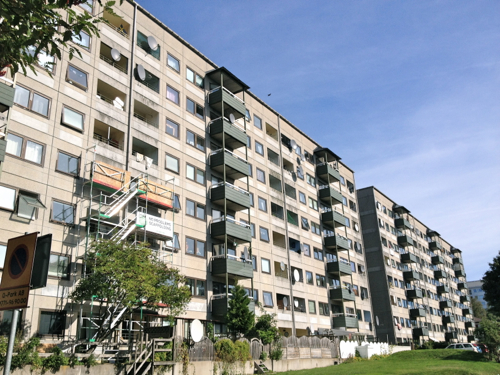

I wonder what metric they use for "not working".
It's not like a lack of rent control is creating vast new supplies of housing here in London and as far as Im aware the fastest period of homebuilding in NYC was in the 50-60s when rent control was at its strictest (https://cbcny.org/sites/default/files/media/image-caption/Ho... ).